


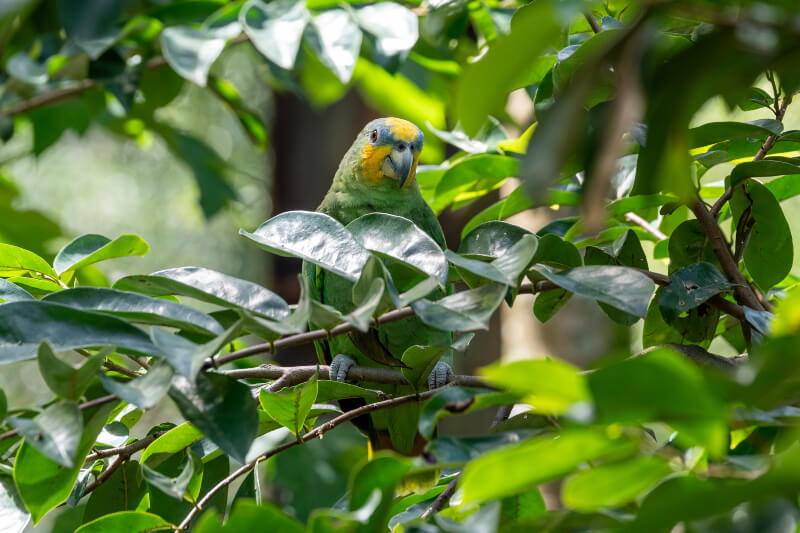
Orange-winged Amazon
Amazona amazonica


The orange-winged Amazon, the great voice of tropical forests
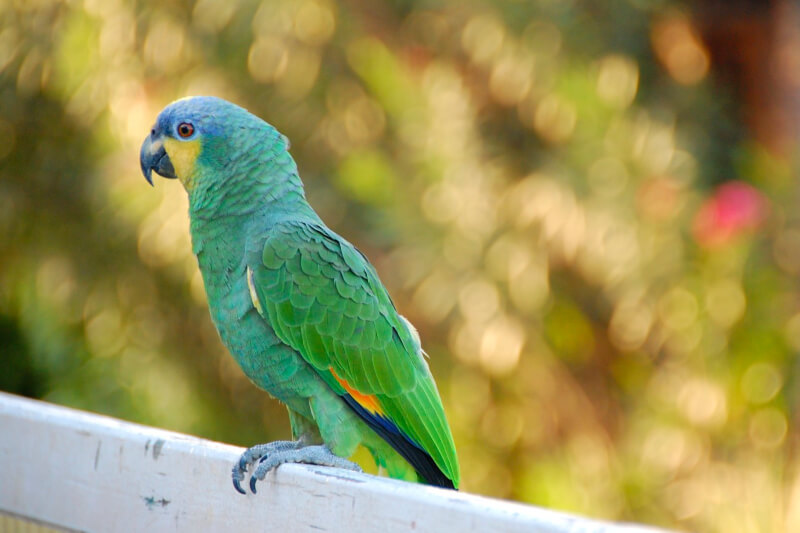
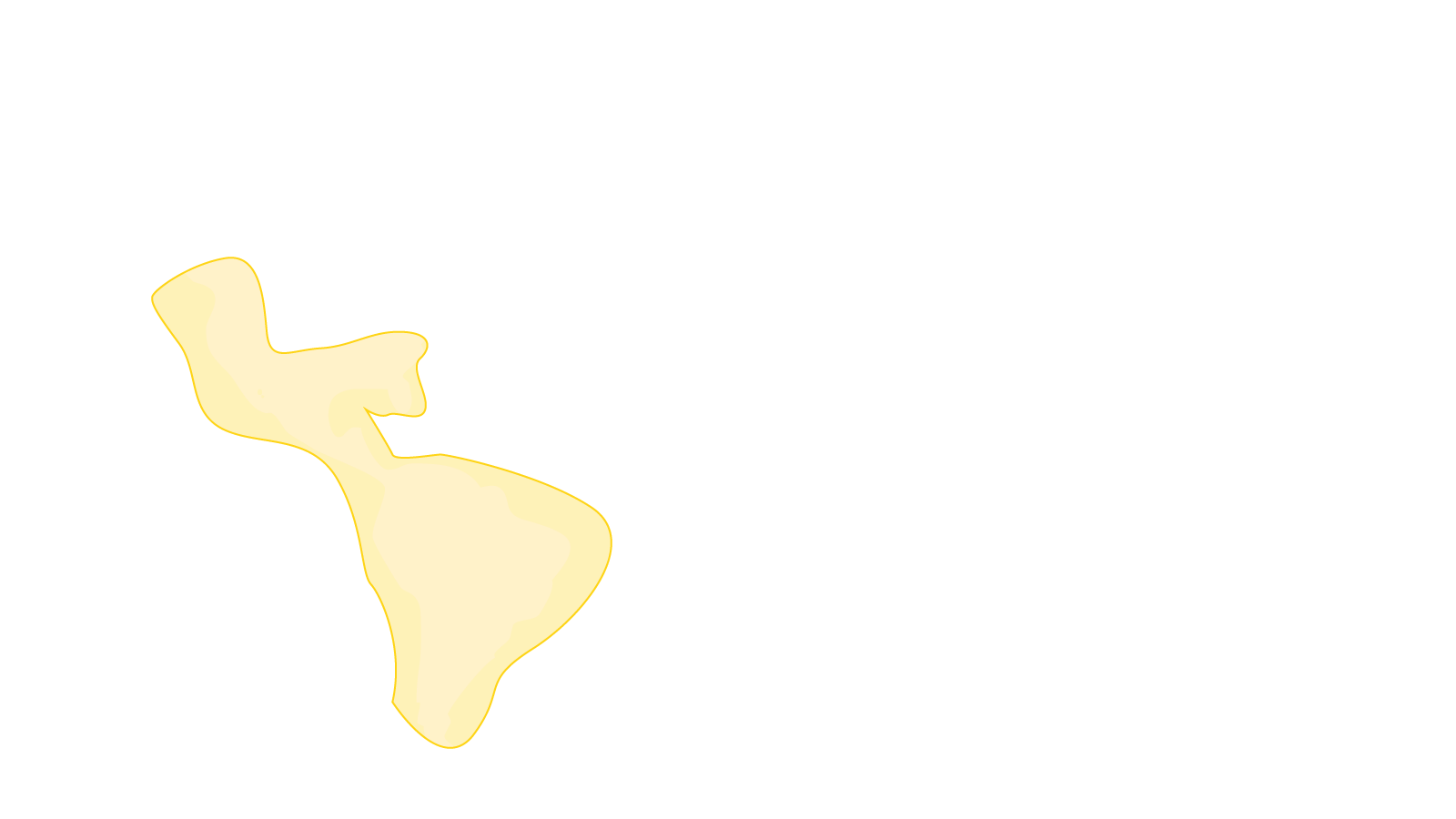
The orange-winged Amazon (Amazona amazonica) is a parrot native to northern South America: From Venezuela, Brazil, Guyana and Suriname. This species mainly occurs in tropical rainforests, but can also evolve in more open wooded areas and along waterways.
The species is classified as Least Concern (LC) by the IUCN. Although its populations are still relatively stable globally, some areas are experiencing local declines due to deforestation and illegal trade. Like other tropical birds found in the park, it plays an important role in the functioning of forest ecosystems.
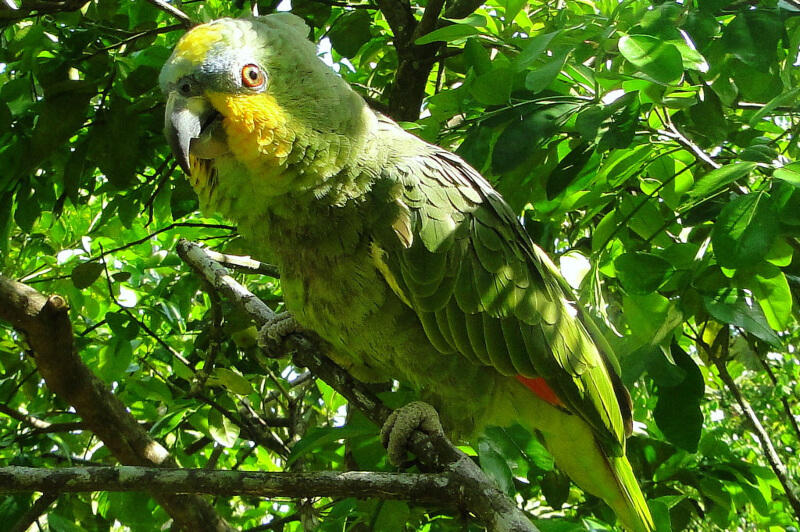
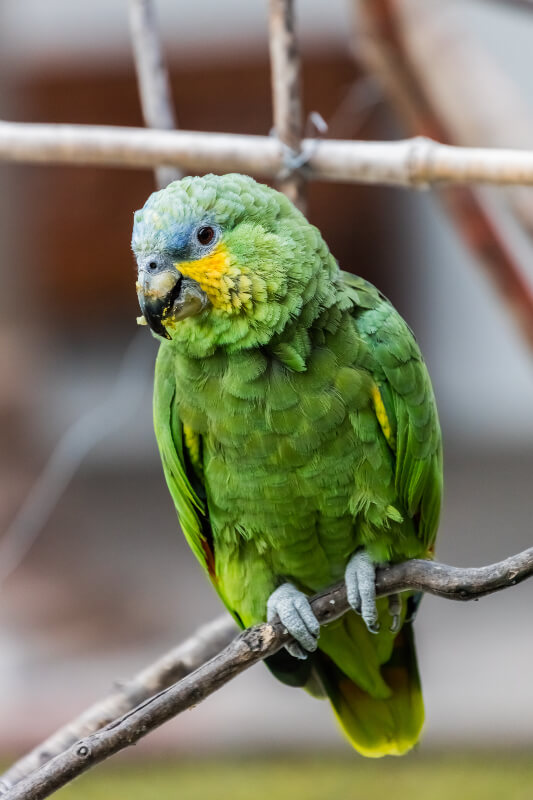
The orange-winged Amazon measures on average between 33 and 35 cm. Its plumage is mostly green, which allows it to blend easily into the vegetation. When it spreads its wings, you can see characteristic orange touches. Its head may have yellowish or bluish shades depending on the individual. Its sturdy spout is perfectly suited to a varied diet.
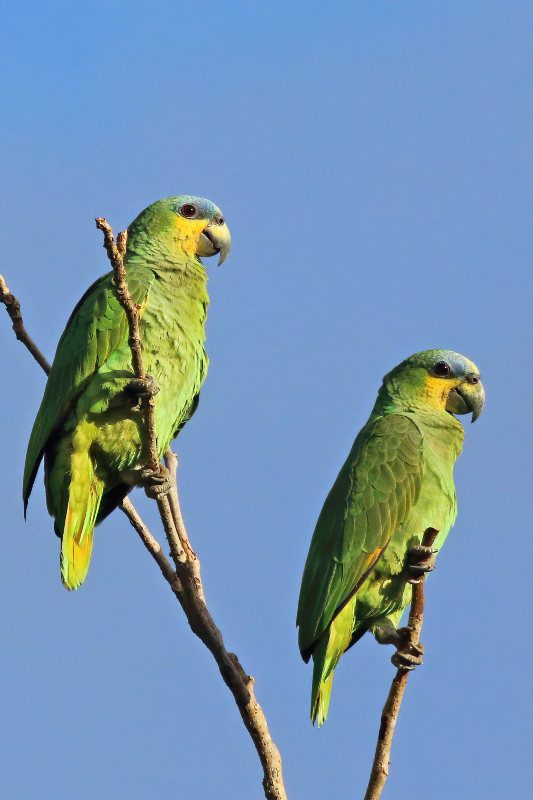
This parrot is sociable and usually lives in pairs or small groups. It communicates through a wide range of powerful cries, used to maintain contact between individuals or to signal danger. This social life is similar to that of other species that can be observed at the Martinique Zoo, such as brown nasturtiums or steles, which also evolve in structured groups.
Its diet consists mainly of fruits, seeds, flowers and young shoots. By feeding, the orange-winged Amazon actively participates in seed dispersal. This role is essential for the regeneration of tropical forests, as is the action of hummingbirds, which are freely present in park gardens and are known for their role as pollinators.
At the Martinique Zoo, the orange-winged Amazon evolves in a vegetated environment integrated into the botanical garden of Habitation Latouche. Its observation makes it possible to better understand the diversity of South American parrots and their importance in tropical natural balances.


.svg)


Quelques anecdotes
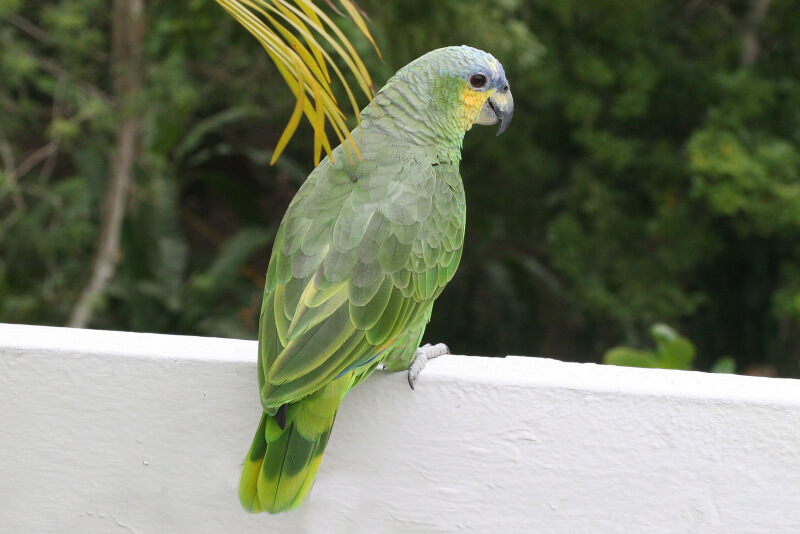
A cry that carries far
The orange-winged Amazon has a powerful voice, capable of carrying over long distances. In its natural habitat, this ability is essential to keep in touch in dense forests where visibility is reduced.
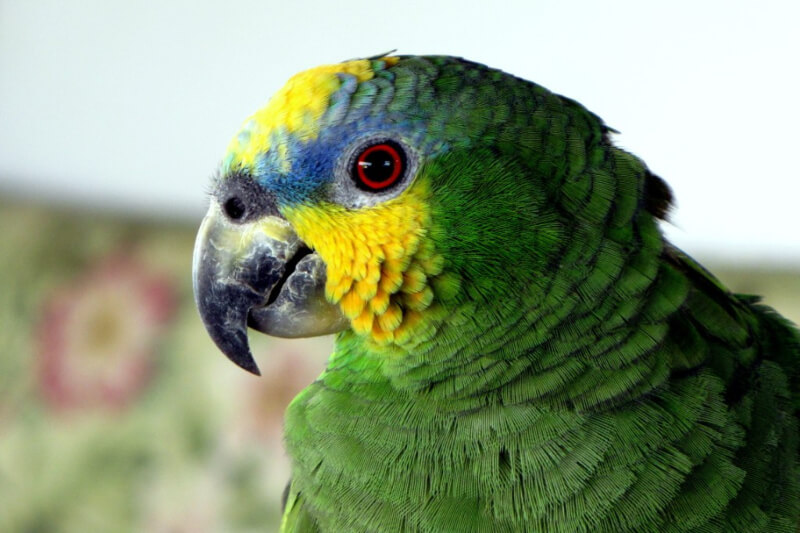
Great loyalty to the territory
Amazon couples often use the same resting and feeding areas over long periods of time. This fidelity makes the species particularly dependent on the preservation of large trees and stable forest environments.
.svg)
