


Blue land crab
Cardisoma guanhumi


The Earth Crab from the Martinique Zoo
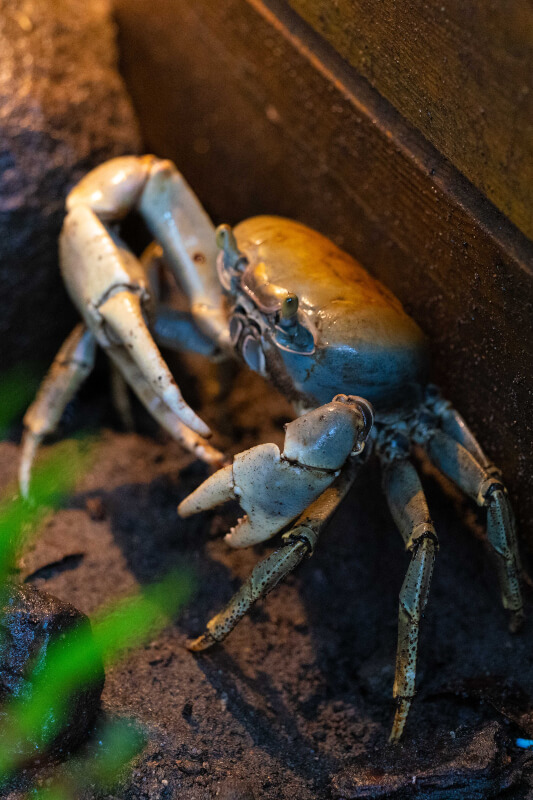
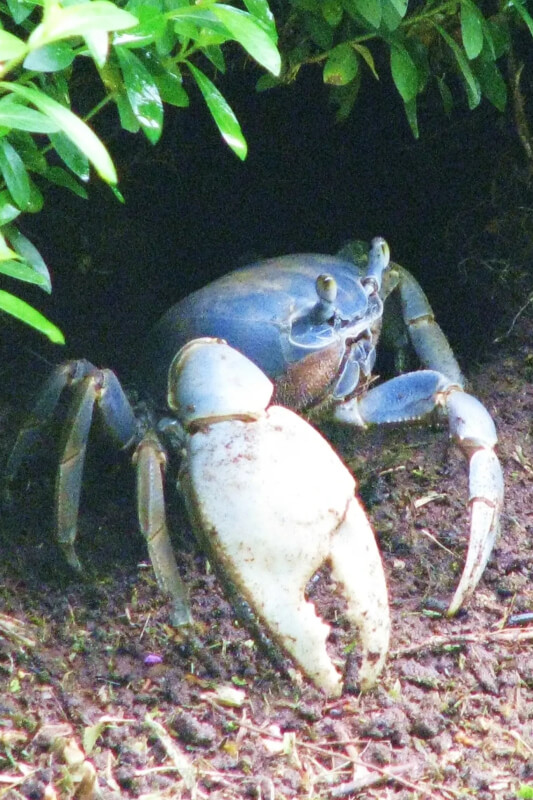
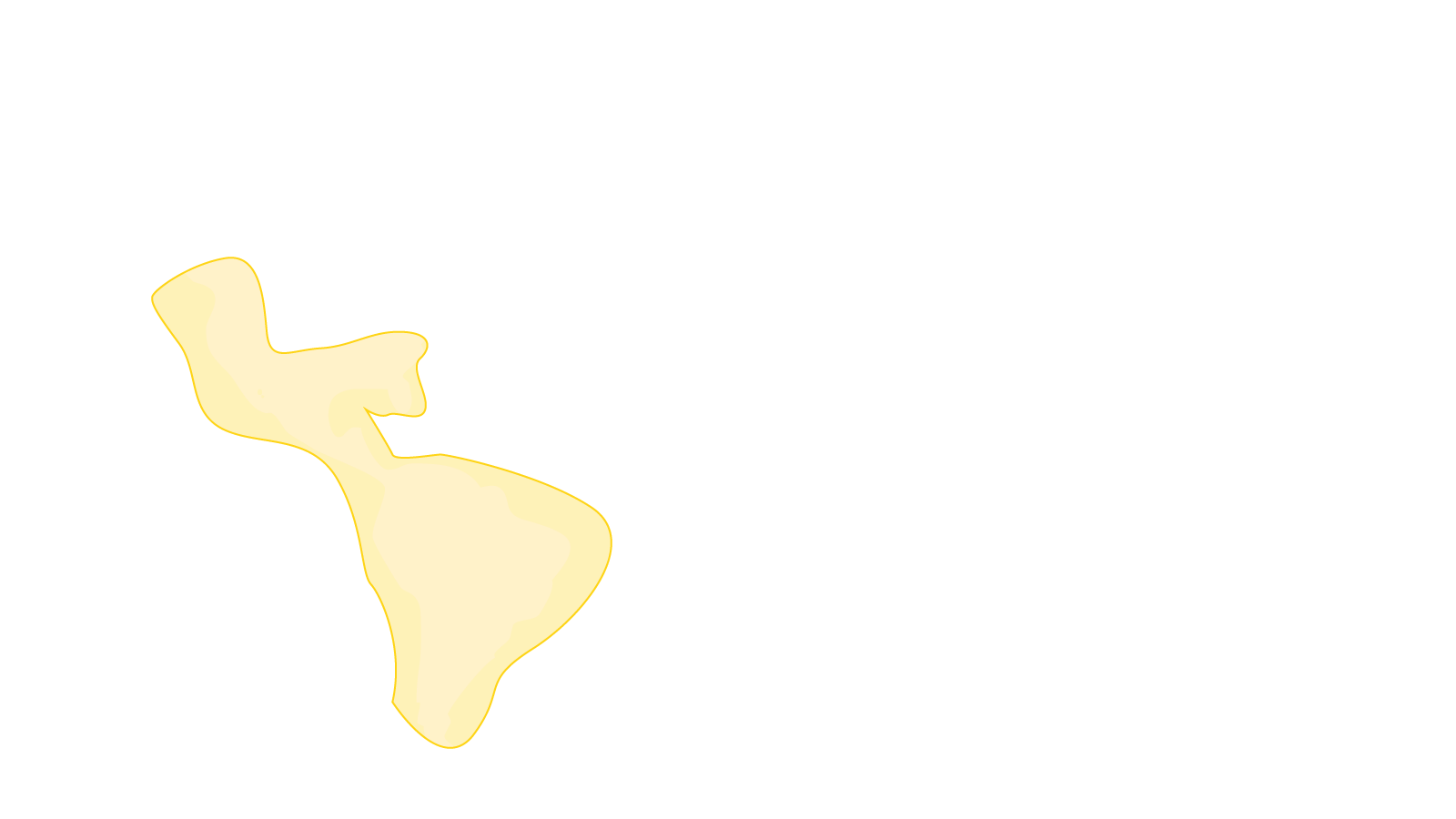
The land crab (Cardisoma guanhumi) is a crustacean typical of tropical and subtropical areas of the Caribbean and Central America. True to its terrestrial lifestyle, it digs long burrows in soft soils, often near wetlands. These galleries, sometimes one meter or more deep, offer refuge and constant humidity, two elements essential to its physiological balance.
The species is classified as Near Threatened (NT) by the IUCN. In several regions, its numbers are decreasing due to the destruction of coastal habitats, pollution or harvesting pressure. In Martinique, this species also contributes to the aeration of forest soils thanks to its burrows, an essential role in the dynamics of the island's tropical environments.
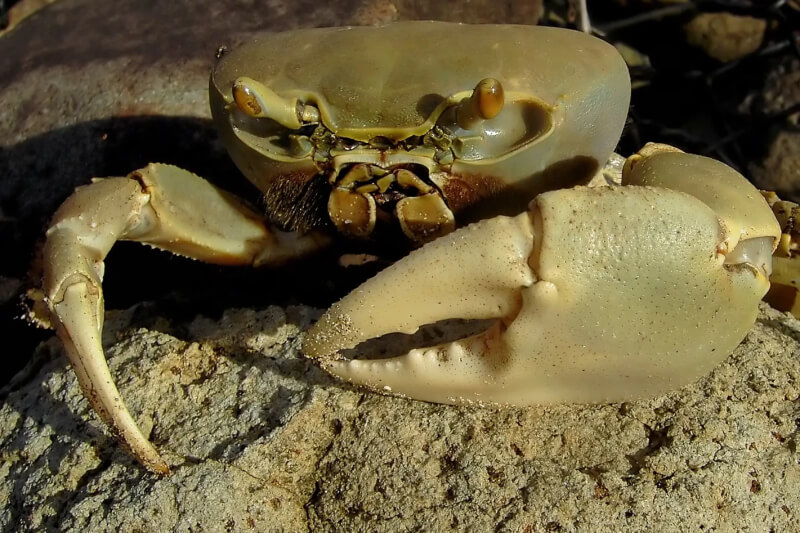
The land crab has a sturdy shell, usually bluish-gray, and large claws that help it defend itself and handle its food. It feeds mainly on plants, decomposing leaves and fruits that have fallen to the ground, but can also consume small invertebrates. It is active especially at dusk and at night, when the air is cooler and the humidity is higher.
Reproduction occurs most often during the wet season. The females then head out to sea to release their eggs into the salt water. The larvae develop there before returning to Earth. This life cycle closely linking forest, mangrove and coastline is emblematic of coastal species in the Caribbean.
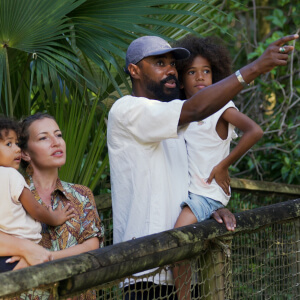
At the Martinique Zoo, the land crab is presented in the space dedicated to small tropical species. It highlights the ecological importance of Caribbean invertebrates and their role in the functioning of island ecosystems.




.svg)


Quelques anecdotes
An expert in natural recycling
By consuming dead leaves and various decomposing plants, the earth crab actively participates in cleaning the undergrowth. Its burrows also promote the degradation of organic matter, which enriches Martinique's tropical soils.

An animal capable of storing water
Land crabs can store water in an internal cavity near their gills. This reserve allows him to stay out of the water for a long time while maintaining the humidity necessary for his breathing, a valuable adaptation in the hot environments of the island.
.svg)
