



Blue Macaw
Ara ararauna


The Blue Macaw, an emblematic parrot of South America
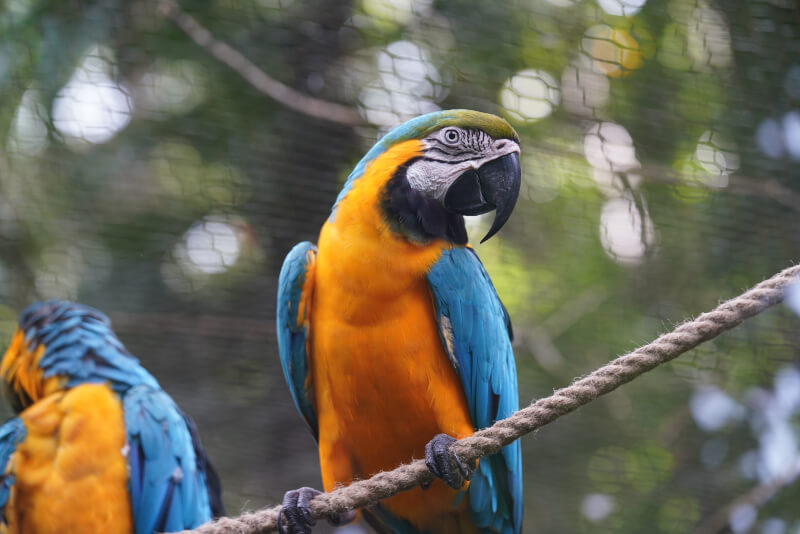
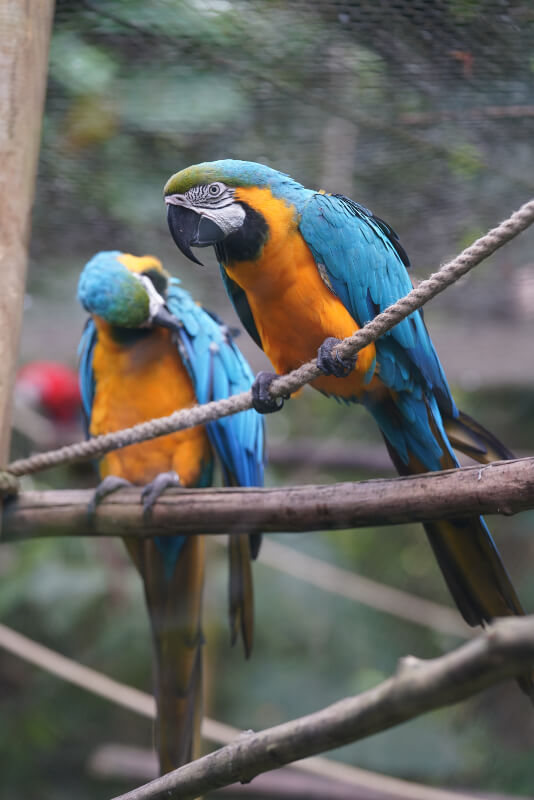
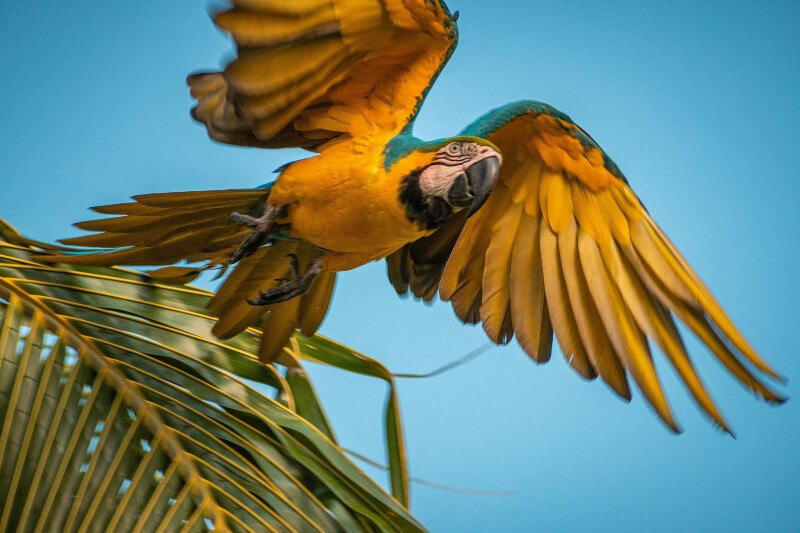
The blue and yellow macaw (Ara ararauna) is one of the most recognizable parrots in South America. Its intense plumage, combining a deep blue on the back with a bright yellow on the chest, makes it a spectacular bird. With a wingspan that sometimes exceeds one meter and a powerful cry that can be heard at a great distance, it inevitably attracts the attention of visitors.
Classified as Least Concern (LC) by the IUCN, the species remains relatively widespread. However, some of its populations are in decline in several regions of the continent, mainly due to deforestation and the illegal capture of young macaws for the wild trade.
This macaw evolves in tropical forests and wooded areas where it finds fruits, seeds, flowers and nuts. Its impressive beak allows it not only to open very hard shells, but also to move with agility in the trees by clinging to them as if with a real additional tool.
The species is known for its exceptional longevity: an individual can exceed 50 years under favorable conditions. In its natural environment, however, it must face predators such as the ferocious harpy or other large birds of prey, in addition to the threats associated with the reduction of its habitat.
At the Martinique Zoo, visitors can admire these colorful macaws in an area dedicated to several species of tropical parrots, allowing a better understanding of their behavior and lifestyle.













.svg)


Quelques anecdotes
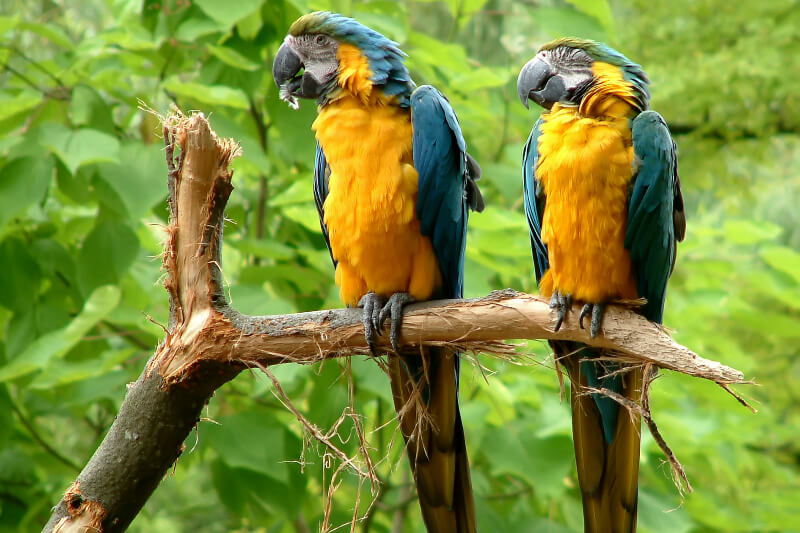
Long-lasting relationships within the couple
Macaws live in groups that can bring together several individuals and form close-knit pairs. Once united, the partners stay together in a sustainable way, sharing rest, food and travel. After breeding, the female usually lays a few eggs that she incubates for about four weeks. The young remain in the nest for several months, but only reach complete autonomy after a long period of learning from their parents.
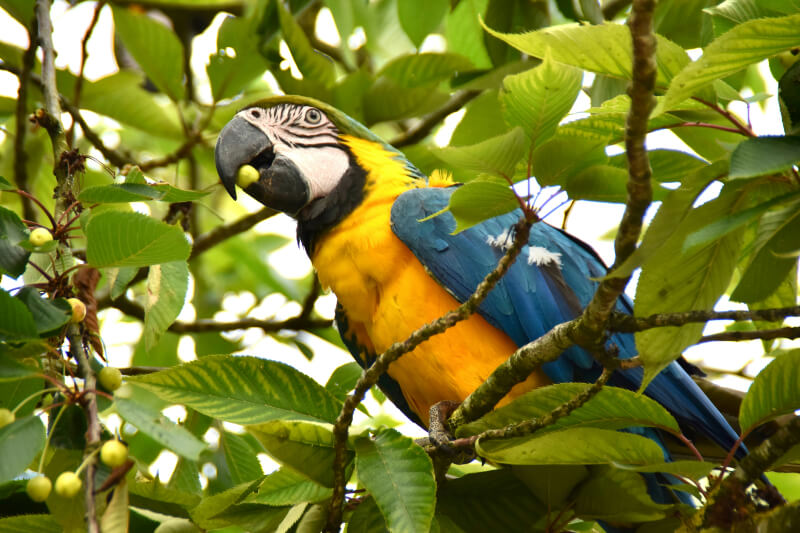
An astonishing eating behavior
In nature, Ara ararauna sometimes consumes plants that contain toxic substances. To limit the undesirable effects of these compounds, he ingests clay found on bank walls or land cliffs. This behavior, well documented in several species of macaws, would neutralize certain toxins and facilitate digestion.
.svg)
