



Jaguar
Panthera onca


The black jaguar at the Martinique Zoo
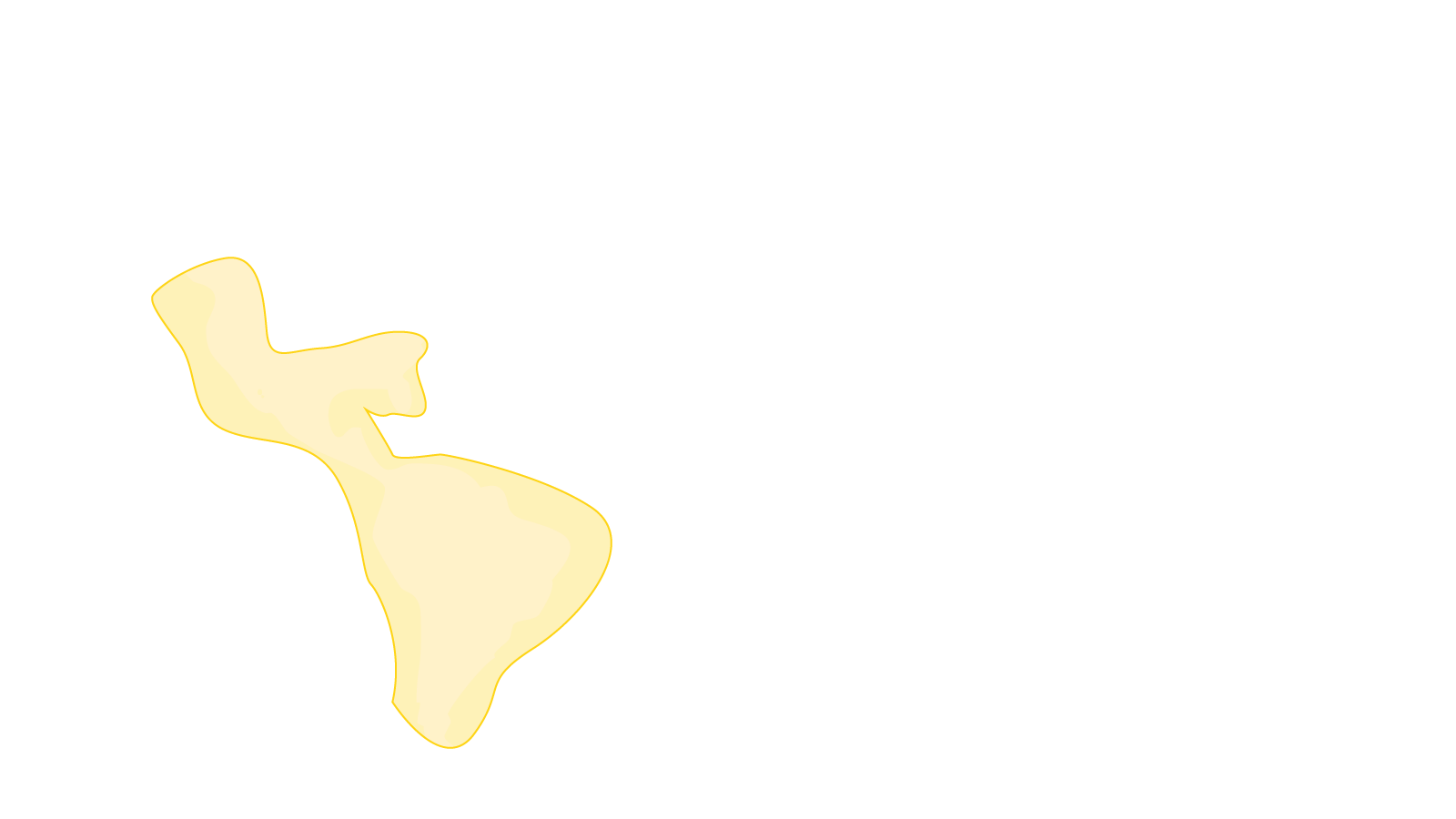
The jaguar (Panthera onca) is the largest feline on the American continent and the third largest in the world, after the tiger and the lion. Native to the tropical forests of Central and South America, it plays a key role in ecological balance. A predator at the top of the food chain, it controls animal populations and contributes to the health of tropical forests.
The species is classified as Near Threatened (NT) by the IUCN. It is under strong pressure due to deforestation, habitat fragmentation and poaching. In several regions, its workforce has declined by more than 50% in half a century. Conservation actions and the involvement of zoological parks now contribute to the preservation of this big cat.
The jaguar can be recognized by its powerful and massive body. It can measure up to 2.4 meters including the tail and weigh between 80 and 120 kg. Its tawny coat is covered with black rosettes unique to each individual. Its jaw, one of the strongest in the animal kingdom, allows it to control prey heavier than itself by even puncturing shells.
A very good swimmer, it frequents wetlands, rivers and wooded areas where water is abundant. It hunts on land as well as in water, catching fish, turtles and small caimans. Solitary, he marks a territory that he explores especially at dawn or dusk.
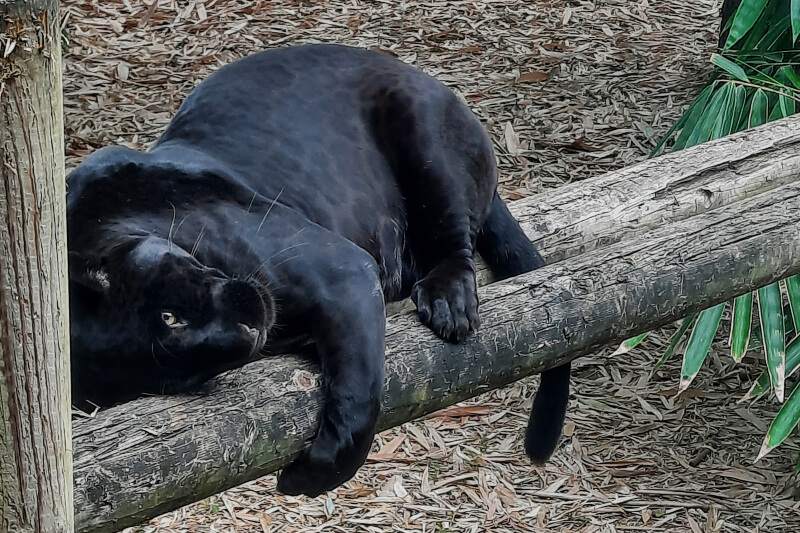
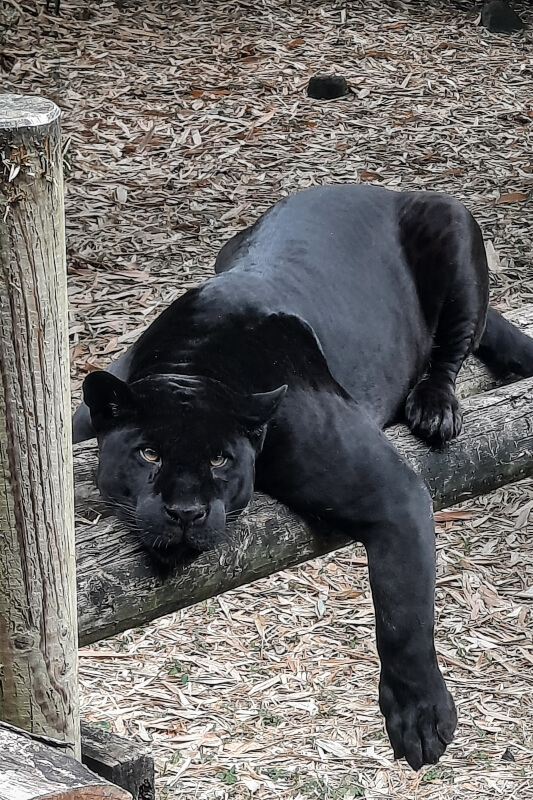
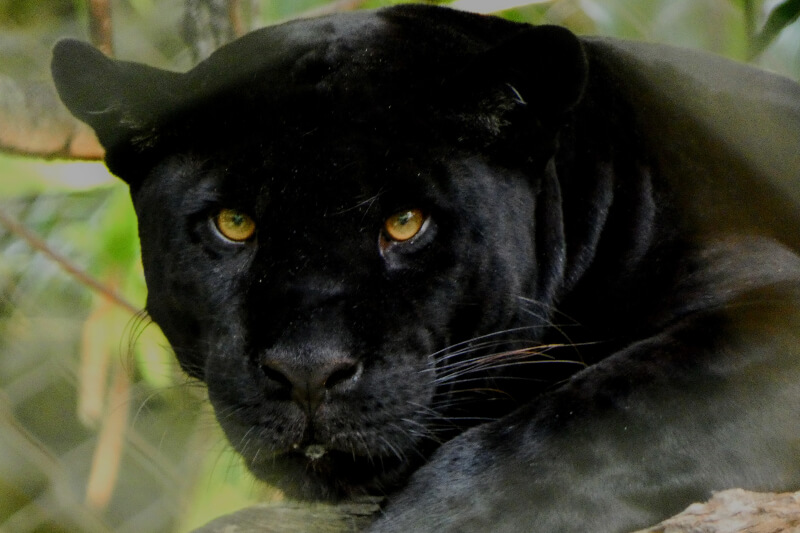
At the Martinique Zoo lives a female jaguar named Faya. It evolves in a vegetated space that recalls tropical forests and allows you to observe its movements, its curiosity and its natural behavior.





.svg)


Quelques anecdotes
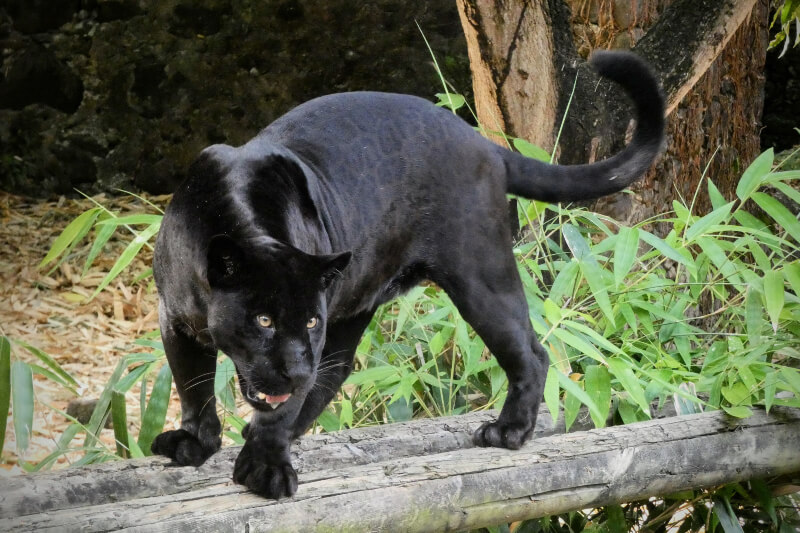
A camouflage that tells a genetic story
Faya intrigued visitors with her all-black dress. This color is due to melanism, a genetic variation responsible for an excess of melanin in its coat. She is therefore not a black panther, but a melanistic jaguar. If you carefully observe its fur, you can still distinguish the typical rosettes, visible as a discreet imprint under the light.
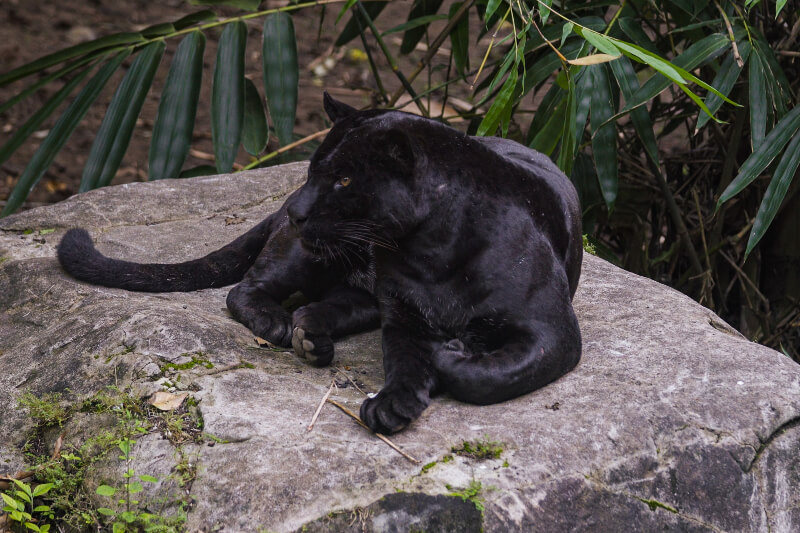
The most powerful bite among felines
The jaguar has an exceptionally strong bite that is proportionally more powerful than that of a lion or a tiger. This strength allows it to pierce the skulls of its prey or to break shells, a unique ability for felines. It makes the jaguar a fearsome predator, capable of adapting to a wide variety of prey in its natural habitat.
.svg)
