



Raccoon
Procyon lotor minor


The Raccoon, the tireless inquisitive of the Zoo
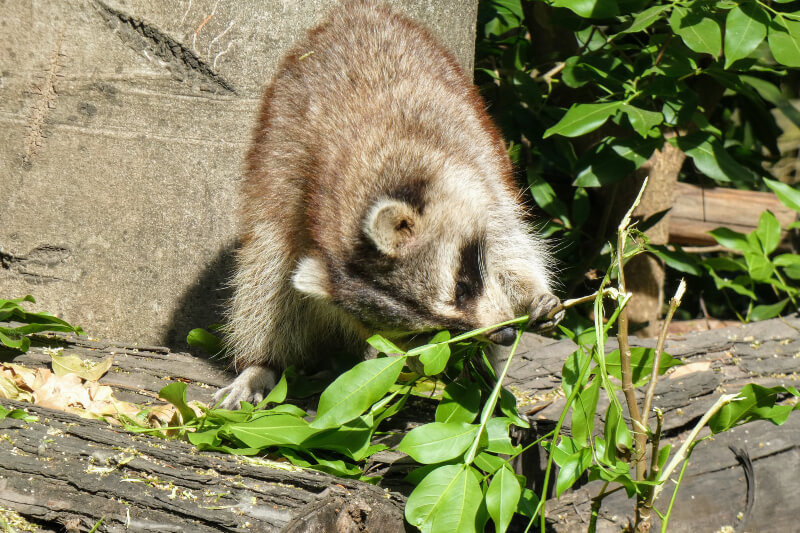
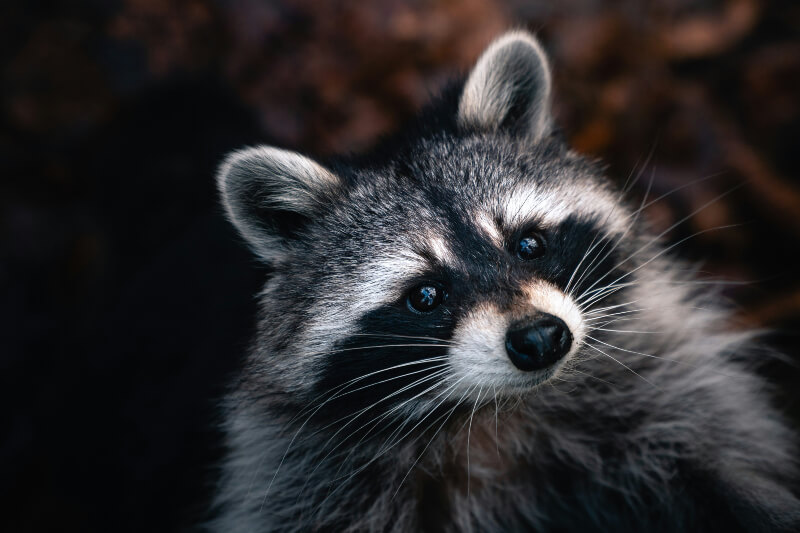
Recognizable by its dark mask and ringed tail, the raccoon (Procyon lotor) is a mammal native to North America. A very adaptable species, it occupies numerous habitats in its area of origin, from forests to areas close to humans. In Martinique, it is not a native species. However, visitors can observe several individuals at the Zoo, in a space designed to promote their natural behaviors.
Curious and active, raccoons use their highly sensitive front legs to search, manipulate objects, and search for food. This tactile ability is well documented: his “hands” rich in receptors allow him to recognize shapes and textures with precision. The species also shows good learning abilities according to several studies.
Its omnivorous diet — fruits, invertebrates, eggs, eggs, small animals, plants — explains its strong adaptability. At the Martinique Zoo, his diet is varied and combined with enrichments that stimulate his exploration behavior.
Active especially at dusk and at night, it takes advantage of the low light to move around. The dark mask around his eyes would limit light reflection and could improve his night vision. Soaking certain foods in water is a well-known behavior. This gesture increases the sensitivity of his fingers thanks to the humidity and inspired his French name.
The species is classified Least Concern (LC) by IUCN. At the Zoo, she plays an essential educational role in explaining the ecology of omnivorous mammals, their sense of touch and their ability to adapt to different environments.














.svg)


Quelques anecdotes
An extremely developed touch
The raccoon's front legs contain a large number of tactile receptors, which gives them fine sensitivity. This ability allows him to examine food and objects accurately, even in low light conditions.

An agile climber
Raccoons are able to climb branches and irregular structures easily. Their particular joint mobility allows them in particular to descend their trunks headfirst, an ability rarely observed in mammals of comparable size.
.svg)
