


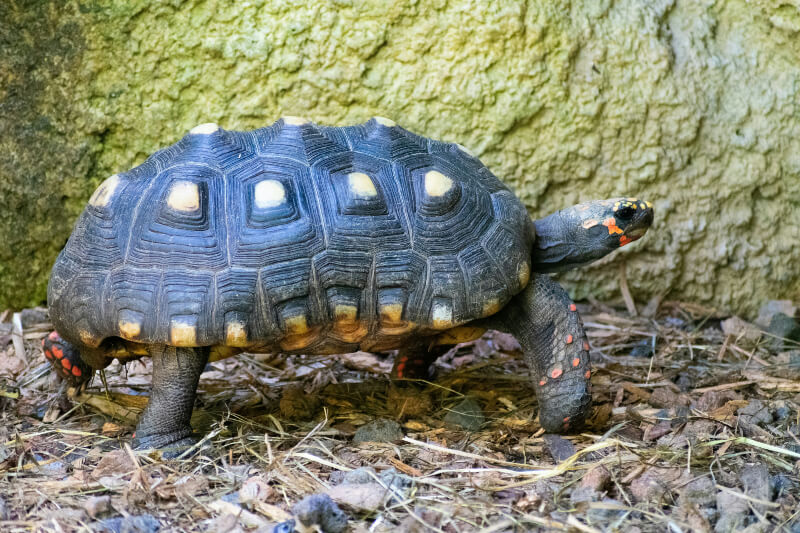
Red-footed Tortoise
Chelonoidis carbonaria


Meet the red-footed tortoise at the Martinique Zoo
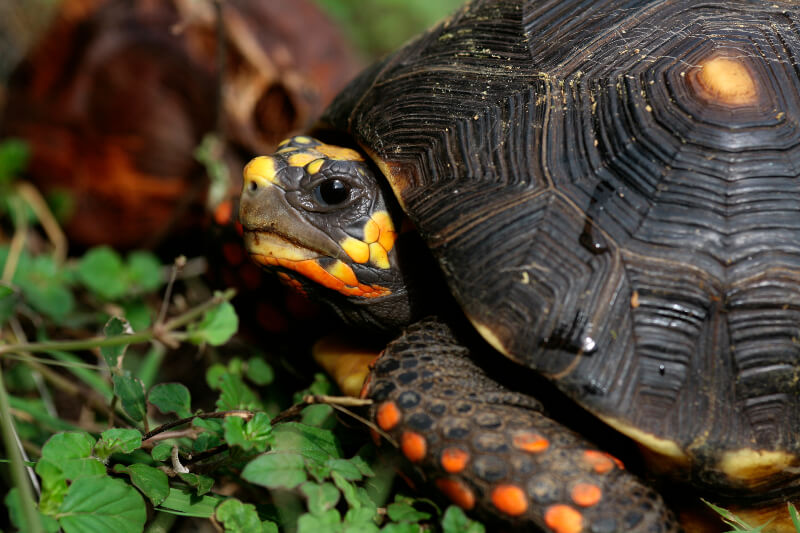
The red-footed tortoise, known locally as the Molokoi turtle, is a medium-sized land turtle that can reach about 40 cm. It lives for a long time, often several decades, when its environment remains stable. Its dark shell decorated with yellow or orange spots gives it an easily identifiable appearance.
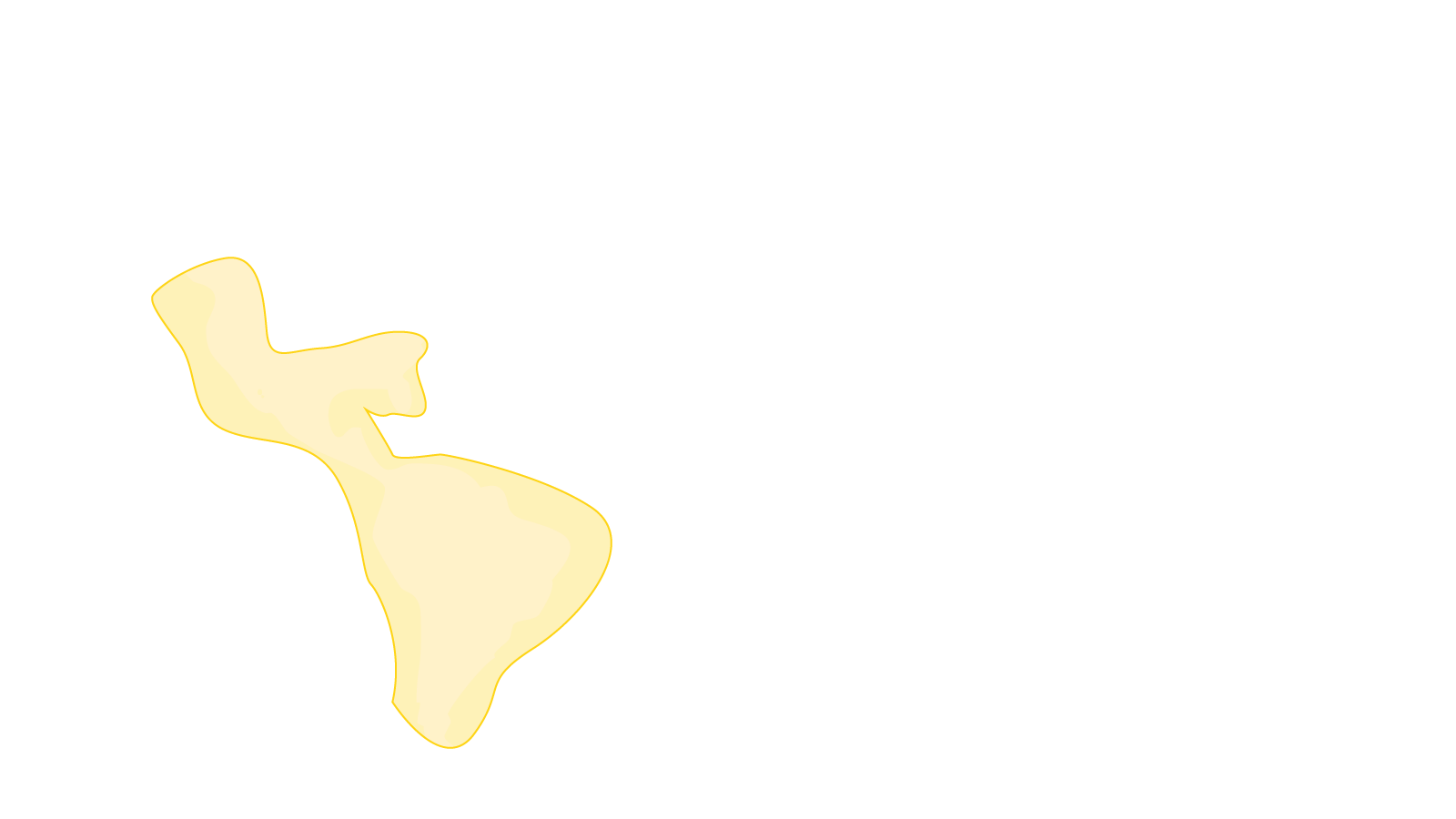
It is observed in several regions of Latin America, such as Venezuela, Panama or Guyana. In the Antilles, including Martinique, it is one of the best known tortoises, especially in wooded areas or near Creole gardens where the vegetation remains dense and humid.
An omnivorous species, the red-footed tortoise feeds mainly on fruits that have fallen to the ground, leaves, young shoots and sometimes small invertebrates. Its varied diet allows it to adapt to tropical environments. By consuming ripe fruits from the undergrowth, it contributes to the dispersal of seeds and participates, on its own scale, in the renewal of Caribbean vegetation.
At the Martinique Zoo, it is presented as an emblematic species of neotropical forests. Its enclosure highlights the plant environments typical of the island: shaded areas, humid soils and refuge spaces, allowing to better understand its way of life and its role in the ecosystem.



.svg)


Quelques anecdotes

A turtle that follows the rhythm of the Caribbean seasons
In Martinique, the red-footed tortoise adapts its activity to variations in rain and heat. After showers, she goes out more often to enjoy fallen fruit and fresh plants. Reproduction is also linked to the seasons. The encounters remain discreet, and the female then digs a small nest in the ground to deposit her eggs before moving away, true to her solitary lifestyle.
A species integrated into the local natural heritage
The red-footed tortoise has a special place in Antillean culture. It is found in traditional stories and in the memories of the inhabitants, because it is one of the most familiar animals in rural areas. Even today, its presence in the forests of Martinique reminds us of the importance of maintaining the natural areas that are home to local wildlife.
.svg)
