



Scarlet Ibis
Eudocimus ruber


The scarlet ibis, a scarlet touch in wetlands
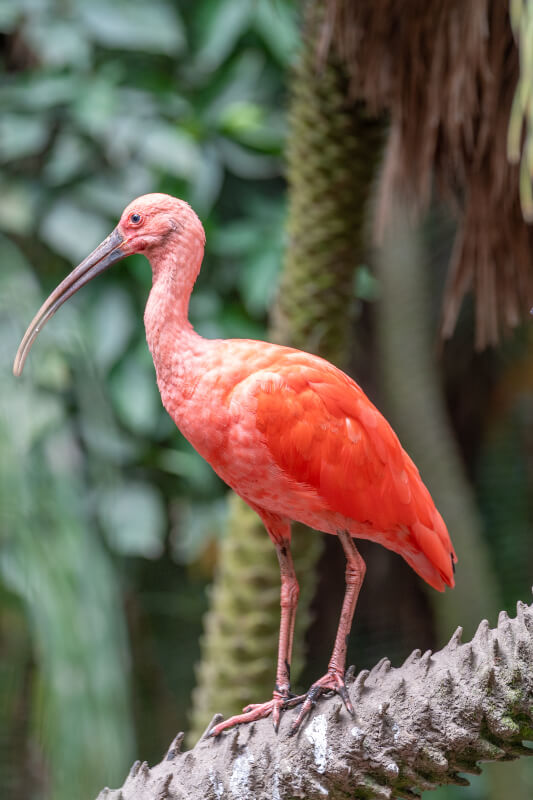
The scarlet ibis (Eudocimus ruber) is a large wading bird native to South America and the Caribbean. It mainly frequents mangroves, lagoons, coastal marshes and shallow wetlands, where it finds most of its food. Its slender silhouette and bright red plumage make it one of the most spectacular birds in tropical aquatic environments.
The species is classified as Least Concern (LC) by the IUCN. It remains globally well distributed, but depends heavily on the quality of wetlands, mangroves and estuaries. The degradation of these environments can have a direct impact on its local populations.
The scarlet ibis is about 70 cm tall. Its long beak, curved downwards, is perfectly suited to finding food in mud. It feeds mainly on small crustaceans, molluscs, aquatic insects and worms. This diet rich in carotenoids is the cause of its intense red color, which intensifies with age and the quality of the diet.
A gregarious bird, the scarlet ibis almost always lives in groups. It moves, feeds and nests in colonies, which reinforces collective vigilance against predators and facilitates reproduction.
At the Martinique Zoo, the scarlet ibis evolves in a vast humid space shared with American flamingos And the Grey crowned cranes.














.svg)


Quelques anecdotes

A refined hunting technique
Unlike many birds that hunt by sight, the scarlet ibis primarily uses touch. Its sensitive beak allows it to detect its prey under the surface of water or mud, even when visibility is low. It searches the ground slowly, sweeping its beak from right to left with great precision.

An observation game for visitors
In the immersive space, the scarlet ibis sometimes blends into the decor despite its bright color. Some individuals stay in the background, others move in small groups. The park is currently home to 29 red ibises. During your visit, will you be able to spot them all among the other big birds in the basin?
.svg)
