


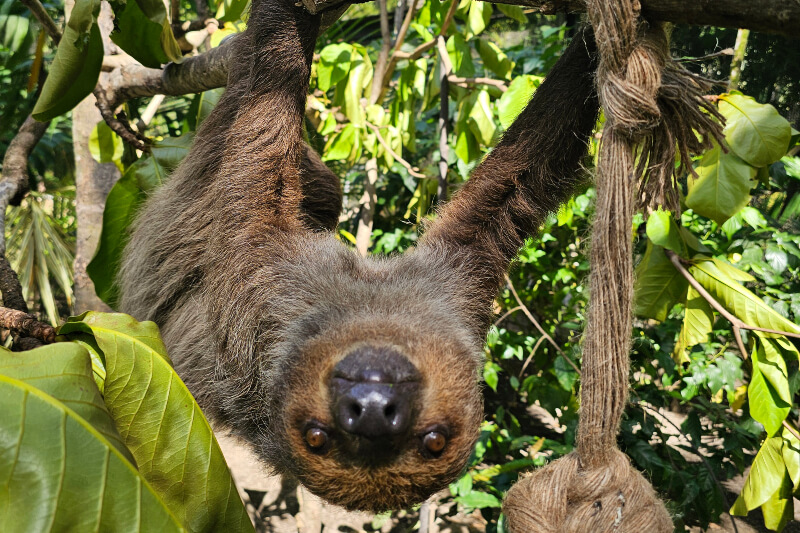
Unau Sloth
Choloepus didactylus


Discovering the unau sloth at the Martinique Zoo
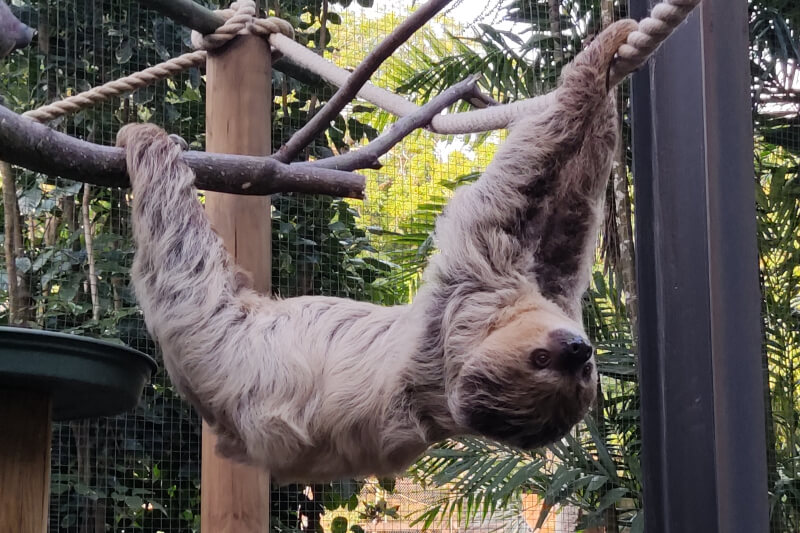
The sloth Unau (Choloepus didactylus), also called two-toed sloth, is known to be one of the slowest mammals in the world. Its displacement does not exceed 0.5-1.5 km/h. It lives in the canopies of Central and South America, where it adopts a quiet and discreet lifestyle, well adapted to the heights of tropical forests.
He spends nearly 80% of his day sleeping. Its metabolism works very slowly and its body temperature remains low, between 24 and 33°C depending on external conditions. His heart also beats very slowly, often around 40 beats per minute, even when he changes position or moves through the branches.
Its coat hosts small algae that change its color over the seasons. In humid periods, it takes on a slightly greenish hue, while in the dry season, its hair becomes browner. This natural camouflage allows it to blend in with vegetation, making its presence difficult for predators, especially big cats, to spot.
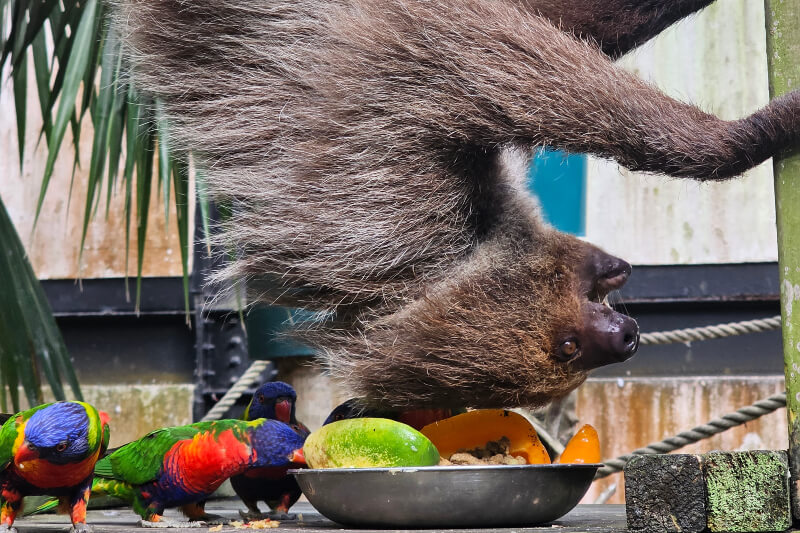
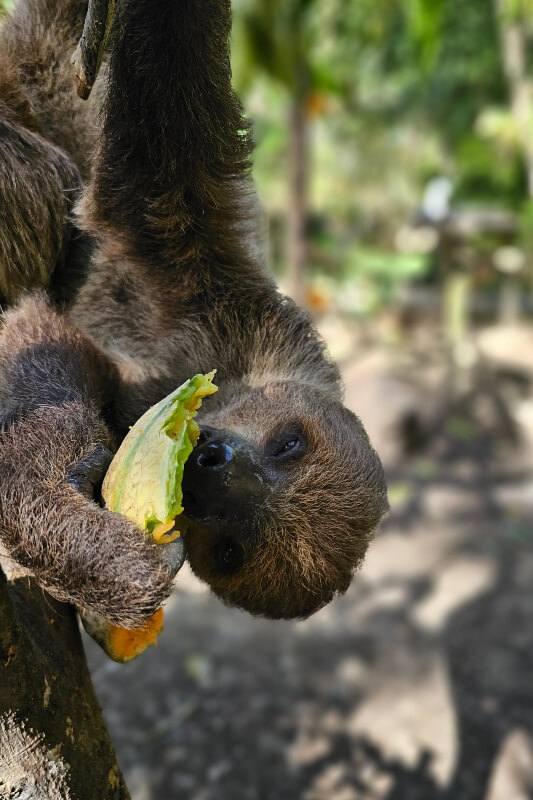
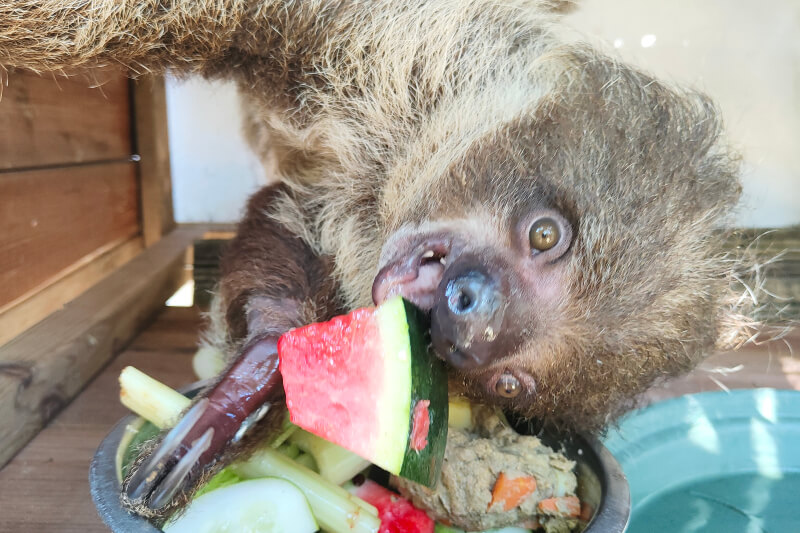
The unau sloth is mostly herbivorous. It eats young leaves, buds, flowers, and sometimes some fruits. It can also swallow small invertebrates. His digestion is extremely slow: a meal can be assimilated in several weeks, which corresponds to the general rhythm of his body.
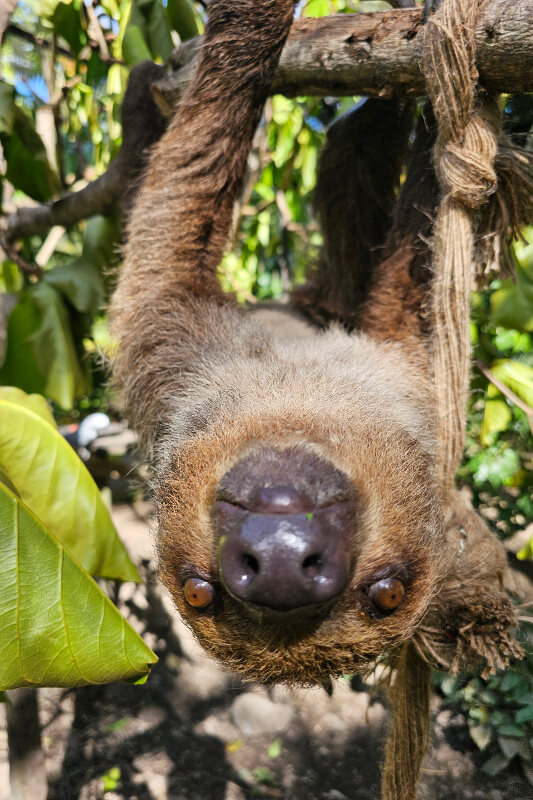
At the Martinique Zoo, visitors can observe the particularity of this way of life and understand its role in the balance of tropical forests, where it contributes to the natural dynamics of vegetation.












.svg)


Quelques anecdotes

A master of natural camouflage
In nature, humans remain so still that they often go unnoticed. He chooses shady areas where his algae-covered coat merges with branches and leaves. This camouflage, combined with its extreme slowness, allows it to escape numerous predators without having to run away.
A little one very attached to his mother
The female gives birth to a single baby after a long gestation. From birth, it clings to her belly and accompanies her wherever she goes. For several months, he learned by watching what she ate. By tasting the same leaves, it gradually becomes able to eat on its own.
.svg)
