

Cane toad
Rhinella marina


The cane toad, an imposing amphibian of Martinique nights
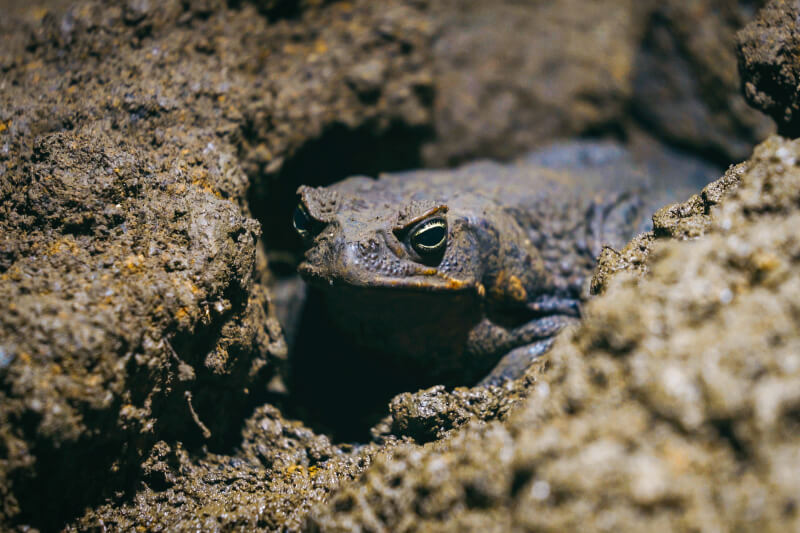
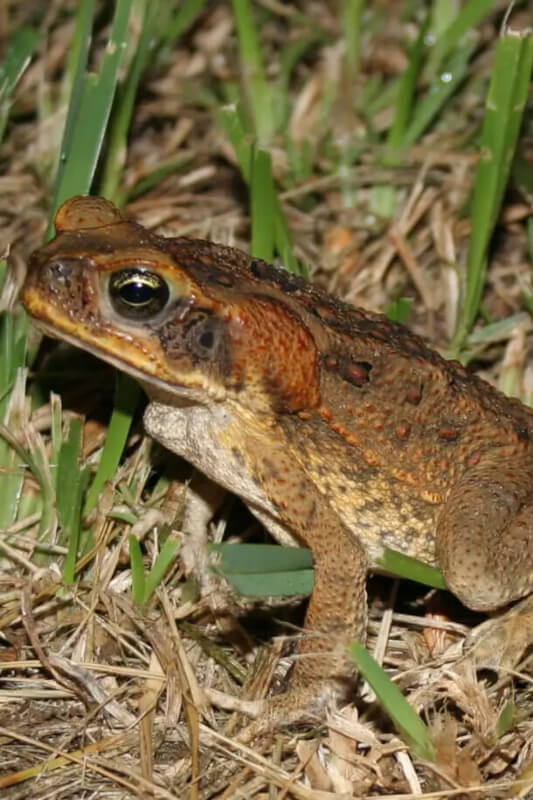
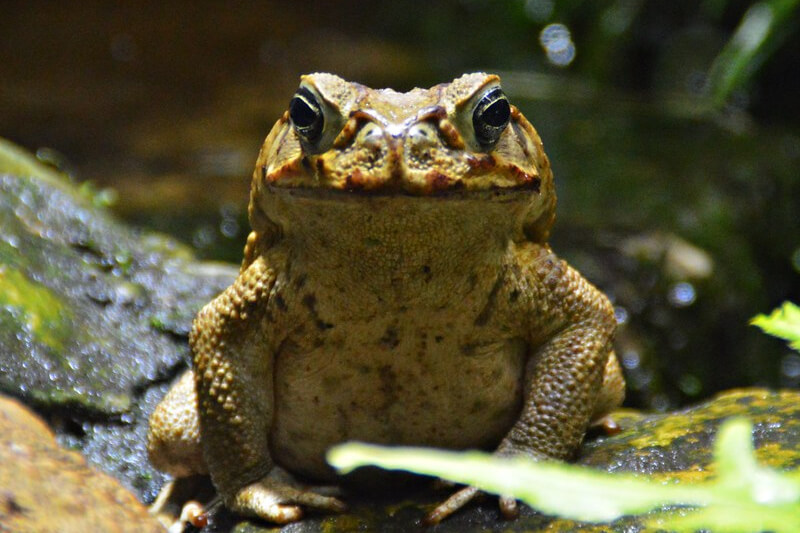
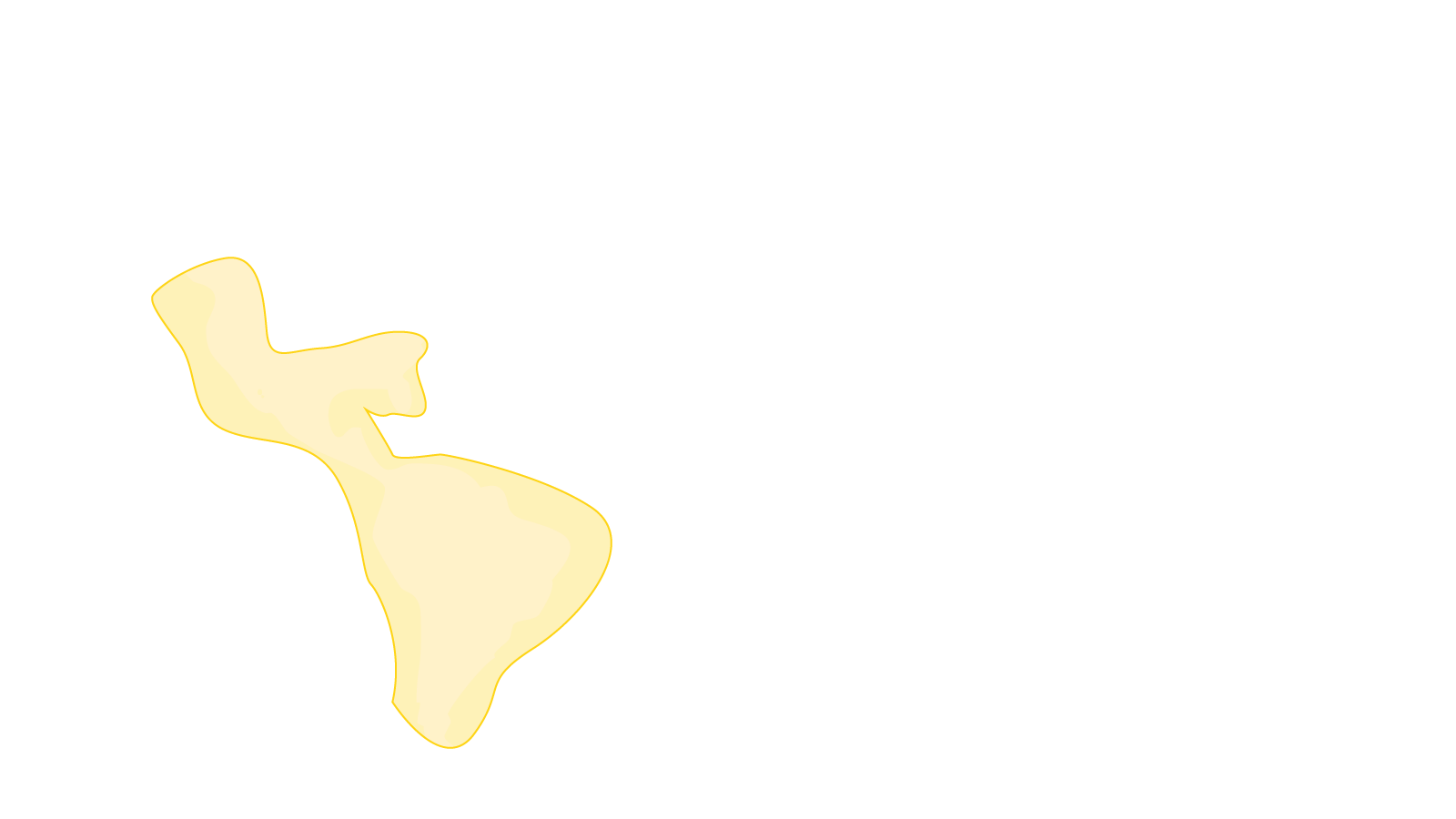
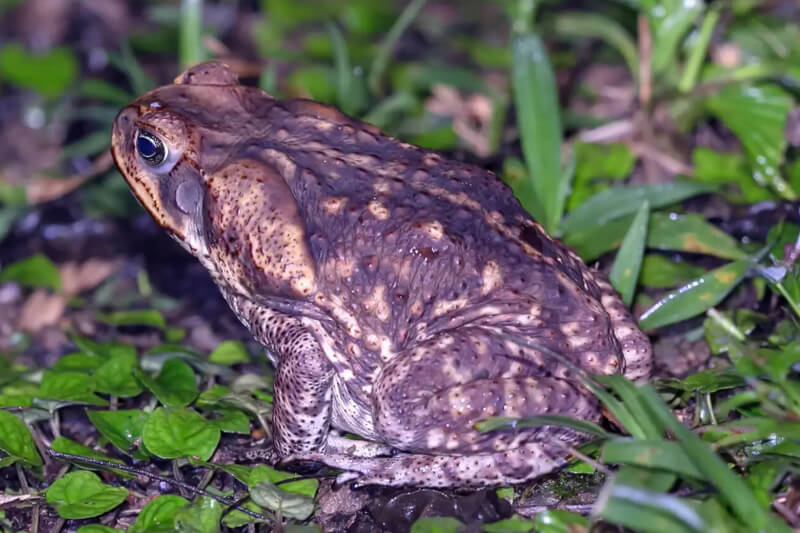
The cane toad (Rhinella marina) is a large amphibian native to Central and South America. Introduced to many tropical regions, it is now well present in Martinique, where it frequents a wide variety of environments. It can be seen especially at nightfall, near wetlands, gardens, ditches, or forest edges.
The species is classified as Least Concern (LC) by the IUCN. Its wide distribution is explained by a remarkable ability to adapt. The cane toad supports very humid environments as well as drier areas, provided there is a water point for its reproduction.
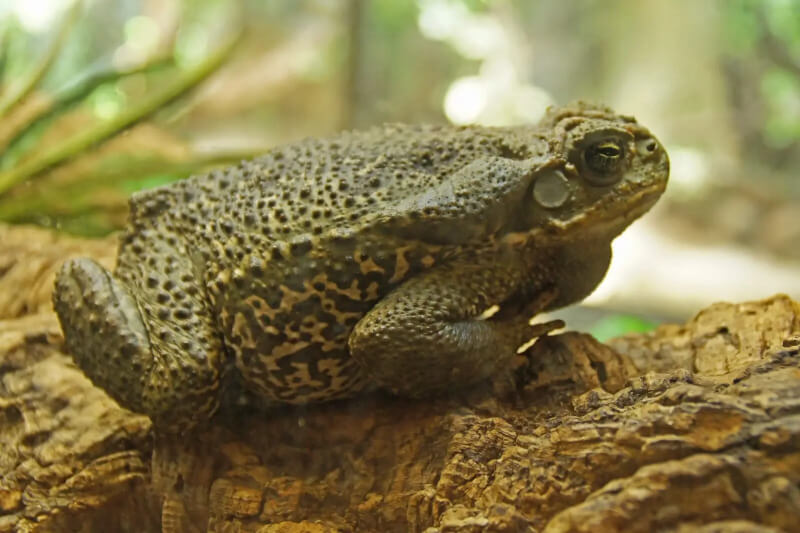
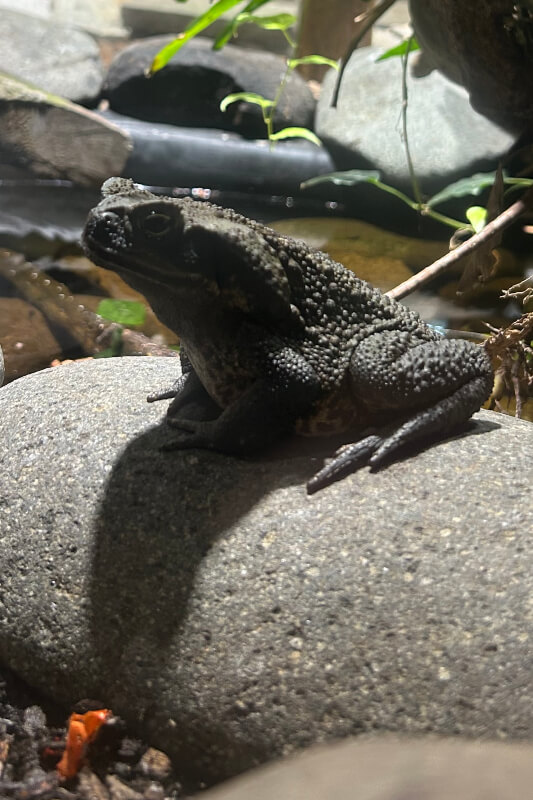
With thick, warty skin, it limits water loss and protects itself effectively from external aggressions. During the day, it remains hidden under leaves, trunks or in natural shelters. It becomes active at night to feed. Its diet is very varied: insects, worms, small invertebrates and sometimes small animal prey. This opportunistic diet contributes to the regulation of certain nocturnal populations, as do discrete species such as Tailless whip scorpion Or the Martinique robber frog.
The cane toad has large glands located behind the eyes, called parotoid glands. They secrete a toxic substance that is a deterrent for many predators. This chemical defense largely explains its success in the environments where it has been introduced.
At the Martinique Zoo, the cane toad is not shown in captivity. However, its potential presence in the natural environment of the park makes it possible to evoke the fragile balances of ecosystems and the consequences of the introduction of non-native species.


.svg)


Quelques anecdotes

A fearsome toxin
The substance produced by the parotoid glands is dangerous for many animals. It acts as a powerful deterrent and strongly limits predation, which favors the survival of the species in various environments.
Well-audible nocturnal concerts
During the breeding season, males emit a low and continuous song to attract females. These vocalizations can be heard at a good distance and are among the characteristic sounds of tropical nights in Martinique.
.svg)
