


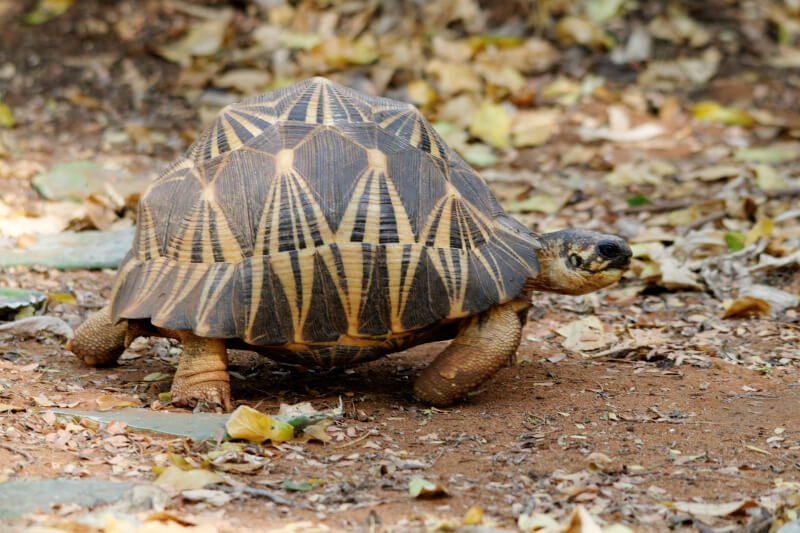
Radiated tortoise
Astrochelys radiata


The Radiated tortoise, an endangered jewel of the Indian Ocean
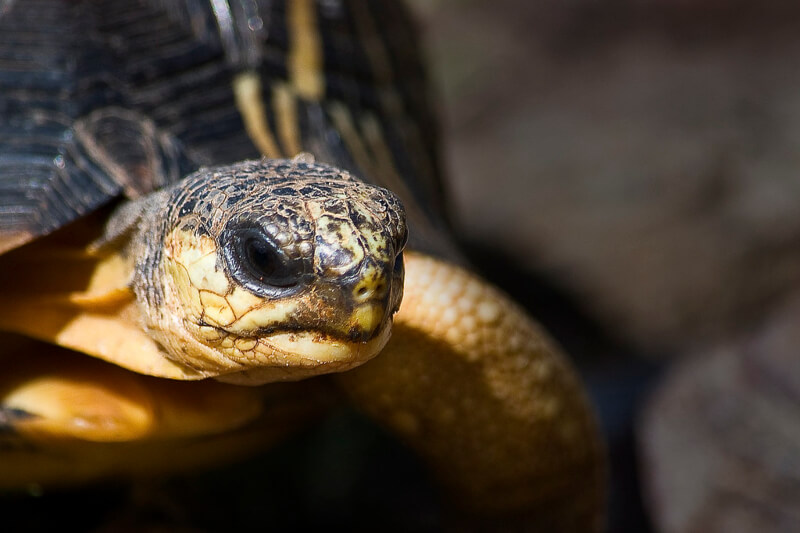
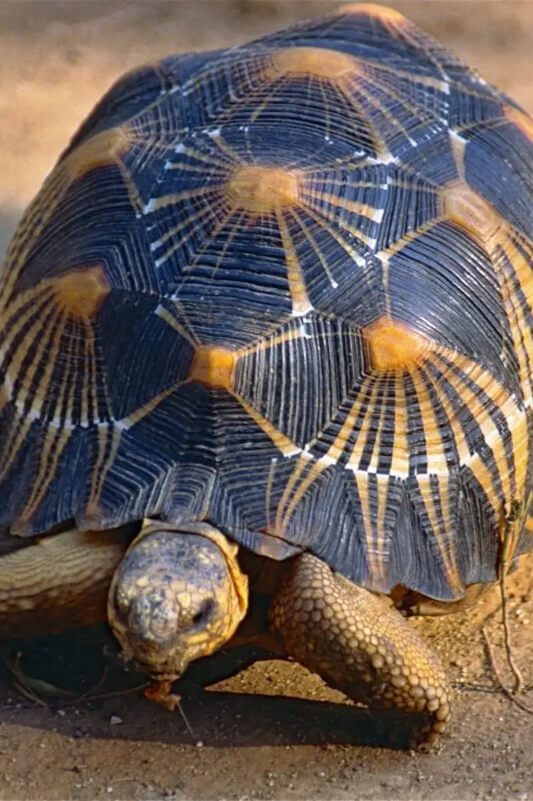
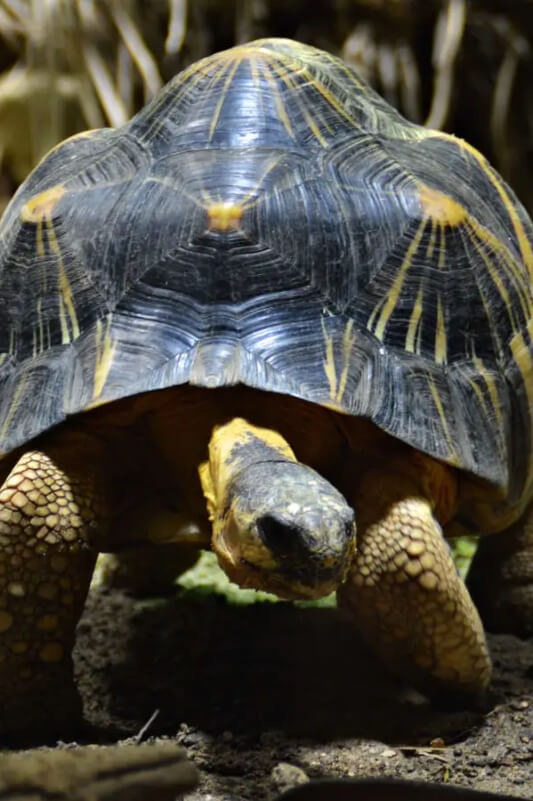
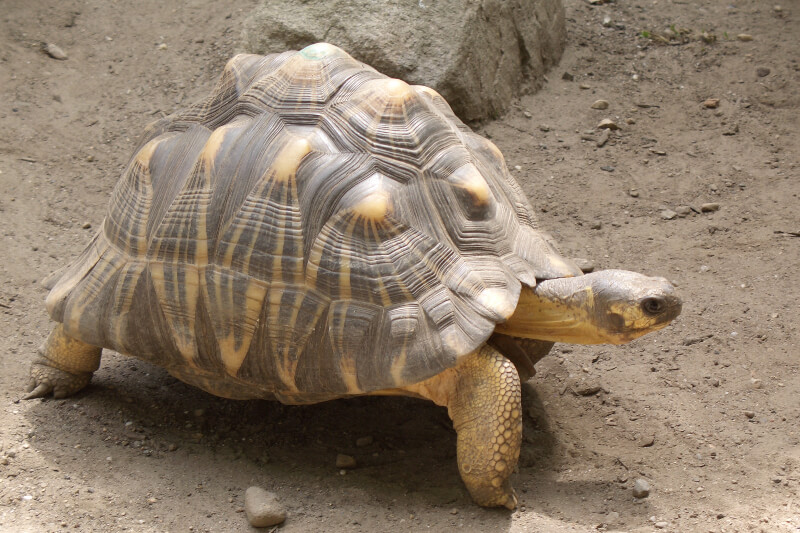
The radiated turtoise (Astrochelys radiata) is a land turtle native to southern Madagascar. It is immediately recognizable thanks to its black shell decorated with yellow patterns in the shape of stars, called rays. This unique appearance makes it one of the most famous tortoises in the world.
The species is classified as Critically Endangered (CR) by the IUCN. It is now seriously threatened by poaching, the destruction of its natural habitat and the illegal trafficking of wild animals. Despite strict legal protection, its populations continue to decline in the wild.
In Madagascar, the Radiated tortoise lives in dry areas, composed of thorny forests, scrub, and arid savannas. It is perfectly adapted to these water-poor environments. Its activity is mainly daytime, with periods of rest during hot weather.
Herbivorous, it feeds mainly on low plants, leaves, flowers and fruits that have fallen to the ground. This diet contributes to the dispersal of certain seeds, an ecological role comparable to that of other tortoises such as Red Footed Tortoise.
At the Martinique Zoo, the radiated tortoise makes it possible to address issues related to the conservation of endangered island species.

.svg)


Quelques anecdotes
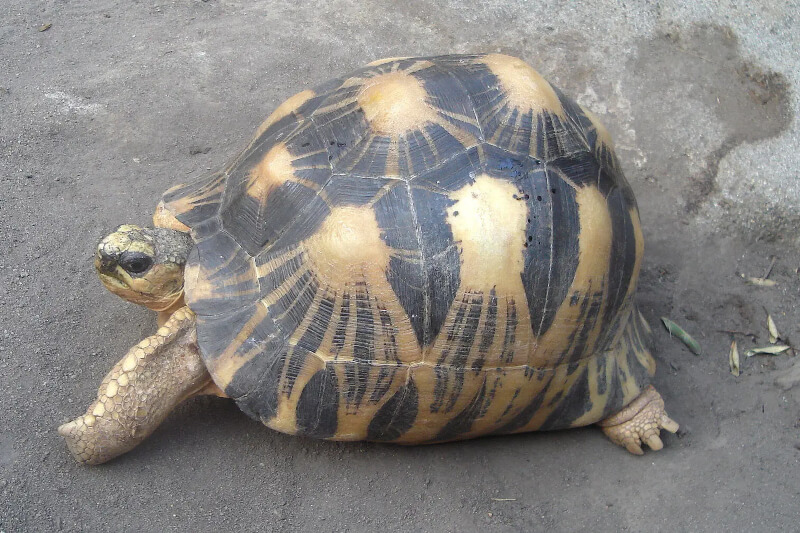
A shell that tells the story of age
The star patterns on the shell widen over the years. Although this does not allow us to know the exact age, the general appearance of the shell often gives an indication of the maturity of the animal.
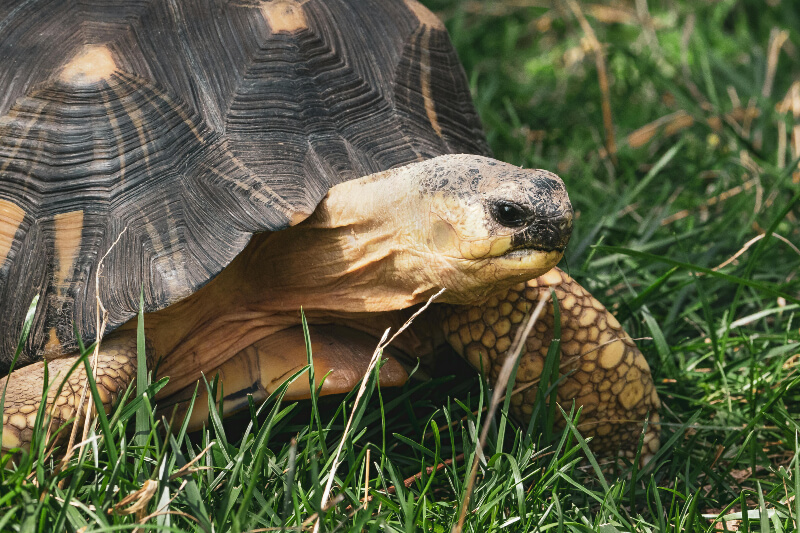
Exceptional longevity
The radiated tortoise is known for its great longevity. Under favorable conditions, it can live for several decades, which makes the loss of an individual particularly heavy for a species that is already very endangered.
.svg)
