



Spider Monkey
Ateles paniscus


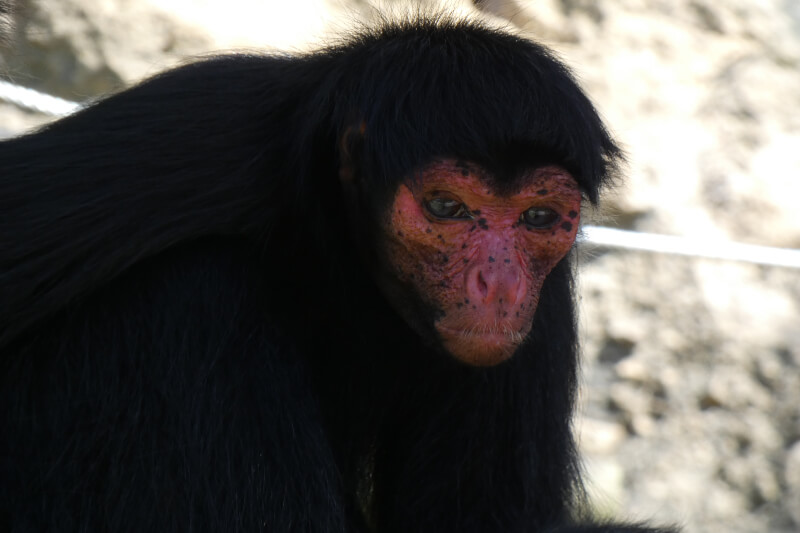
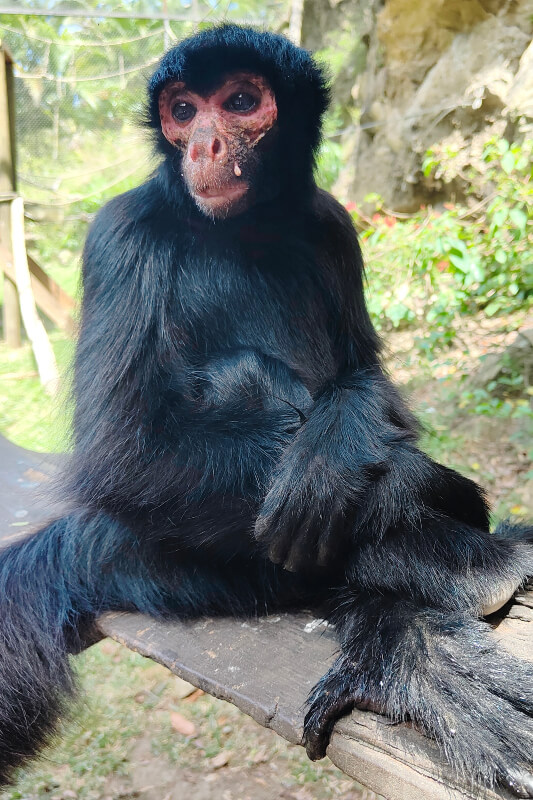
Spider Monkeys at Zoo of Martinique
The red-faced stele (Ateles paniscus), also called spider monkey or kwata, is a large primate native to the forests of South America. It lives high in the canopy of primary forests, especially in Guyana, Brazil and Suriname. It rarely goes down to the ground and makes very little use of secondary forest areas for its movements.
It is one of the fastest and most flexible primates in South America. Its very long arms and its prehensile tail are perfectly adapted to life at heights. This tail, which also serves as a pendulum, acts like a fifth limb and allows it to move without ever touching the ground.
The red-faced stele feeds mainly on ripe fruits, but also on young leaves and seeds. By consuming these plants, he carries seeds from one tree to another, which contributes to the natural regeneration of the tropical forest where he lives.
The species is classified as Endangerd (EN) by the IUCN. It is threatened by deforestation, the reduction of its territory and hunting, which greatly weaken its populations in several regions of South America.
At the Martinique Zoo, three harteles live together: Stone, the male, and two females, Ali and Adèle. Their presence makes it possible to introduce visitors to a very specialized arboreal primate and to raise awareness of conservation issues related to tropical forests.













.svg)


Quelques anecdotes
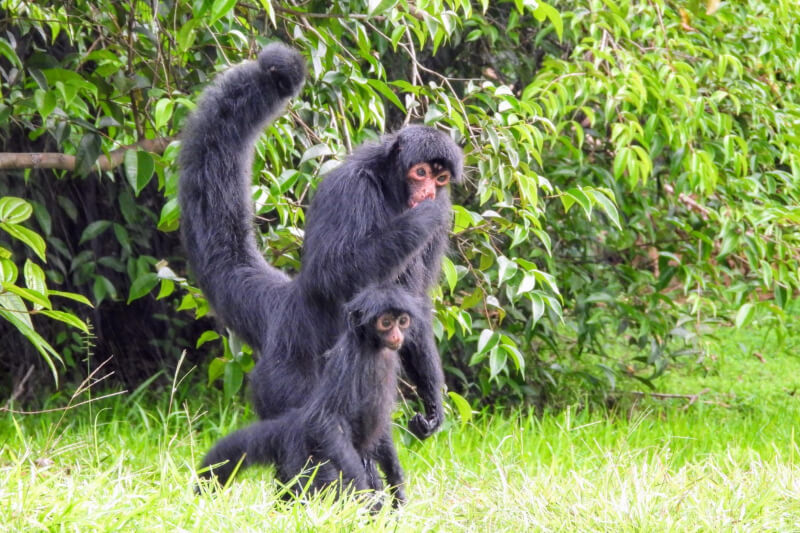
A group united by social ties
Teles use numerous gestures to communicate: contacts, vocalizations, postures or tail movements. These exchanges reinforce the cohesion of the group. In Martinique, Stone, Ali and Adèle spend a lot of time observing each other, getting closer or following each other, which helps to maintain the unity of the small group.
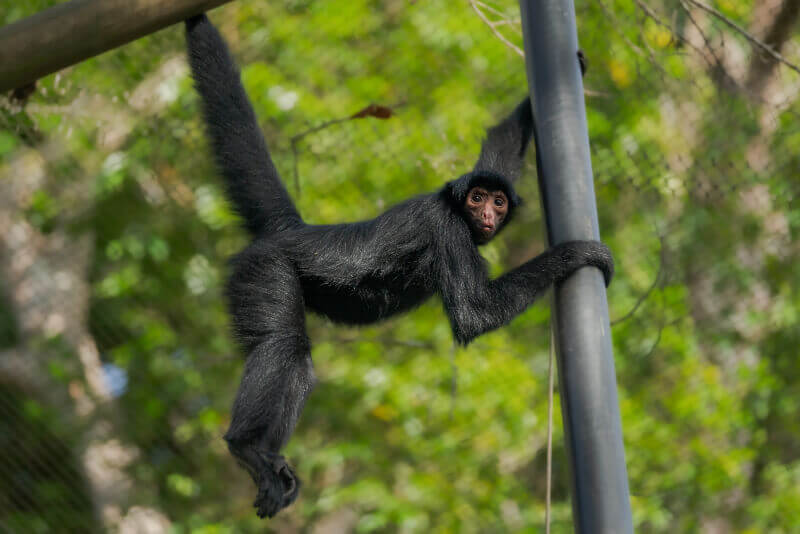
A tail stronger than your hands
The tail of the red-faced harp can support all of its weight. It allows it to remain suspended to reach distant fruits or explore a branch without the risk of falling. This impressive strength makes its tail an essential tool for its balance and survival in the heights of the forest.
.svg)
