


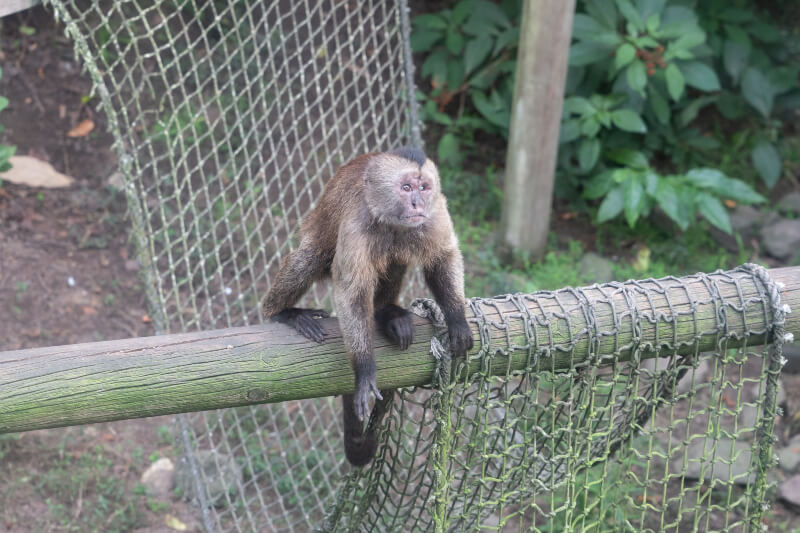
Wedge-capped capuchin
Cebus olivaceus


The wedge-capped capuchin, agile primate of South American forests
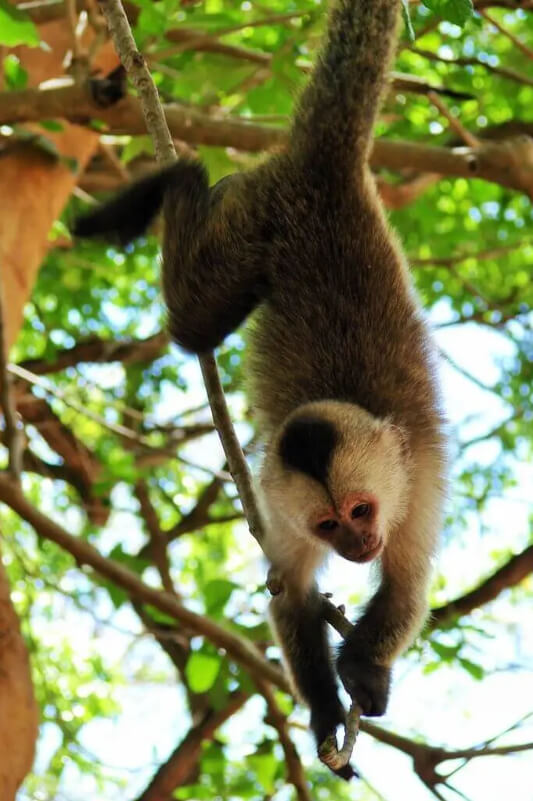
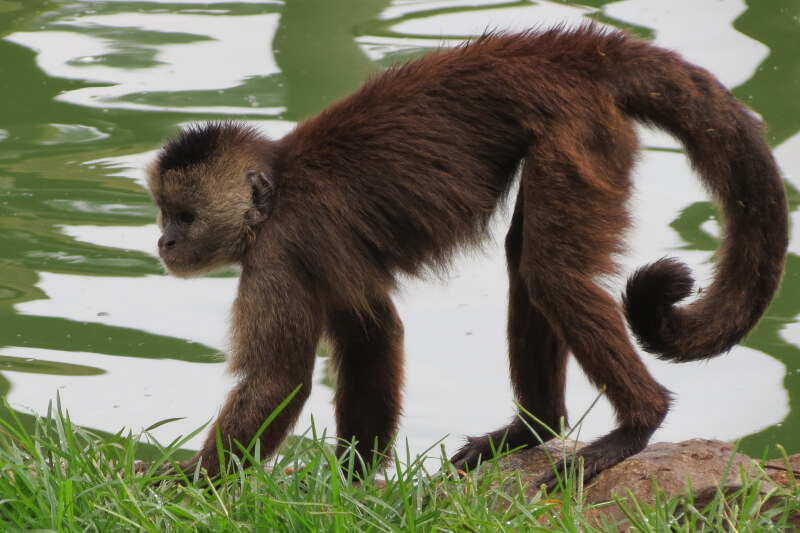
The wedge-capped capuchin (Cebus olivaceus) is a primate native to South America. It lives mainly in tropical rainforests, but it also occurs in dry forests and more open woodlands. Very mobile, it evolves mainly in the canopy and intermediate floors of the forest, where it moves quickly and precisely.
The species is classified as Least Concern (LC) by the IUCN. Its populations remain generally stable, although deforestation and habitat fragmentation may affect some regions. Like other arboreal primates, such as the Red-faced harteed monkey, the wedge-capped capuchin depends heavily on the continuity of forests to survive.
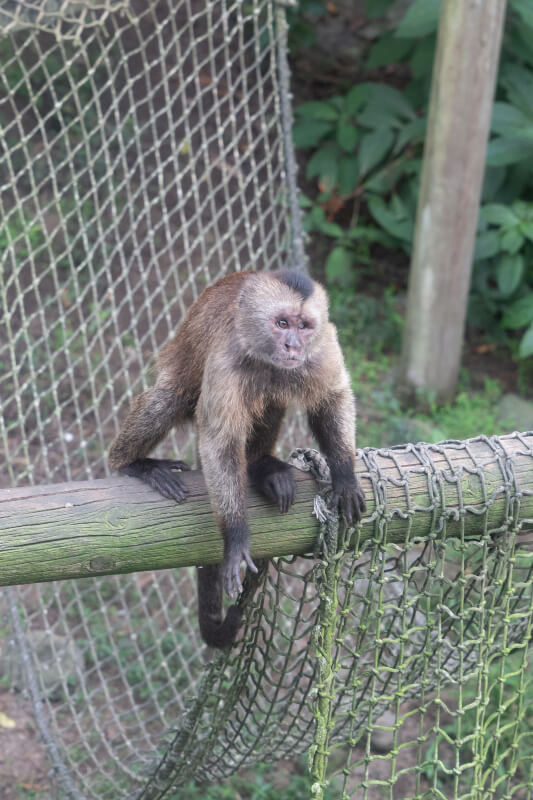
The white nasturtium measures about 35 to 45 cm, not including the tail. It is not completely prehensile but plays an essential role in balance. Its light coat on the head and chest contrasts with darker areas on the back and limbs.
Omnivorous, it feeds on fruits, seeds, leaves, leaves, insects and sometimes small vertebrates. He spends much of the day exploring his environment in search of food. This constant activity contributes to seed dispersal and the maintenance of plant diversity.
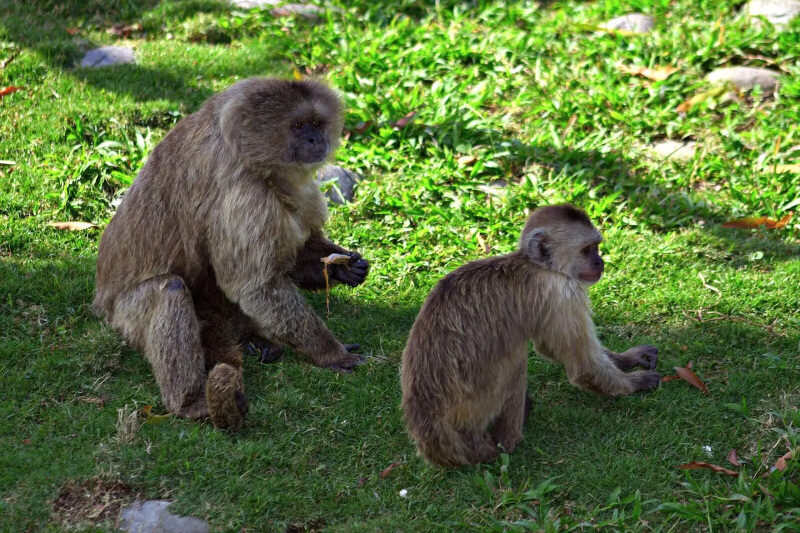
A diurnal and very social animal, the white nasturtium lives in structured groups. Individuals communicate through screams, postures, and lots of physical contact. This collective organization improves vigilance against natural predators, in particular birds of prey and big cats such as the jaguar.
At the Martinique Zoo, the white nasturtium makes it possible to approach the intelligence of primates, their social interactions and their adaptation to arboreal life.












.svg)


Quelques anecdotes
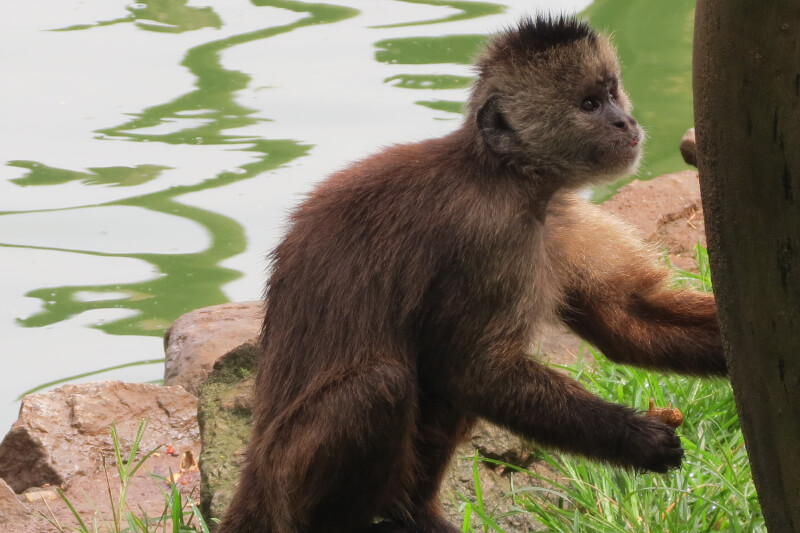
A tireless explorer
The wedge-capped capuchin is known for its very curious behavior. He constantly inspects branches, trunks, and objects in his environment, using his hands with great precision to manipulate, open, or examine what's around him.
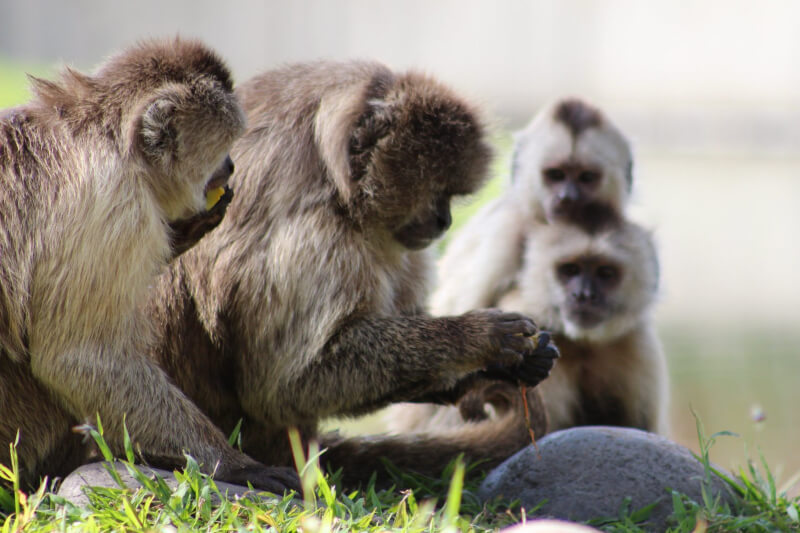
A well-established hierarchy
In a group of wedge-capped capuchin, each individual occupies a specific place. Social relationships are maintained through frequent grooming sessions, which are essential for strengthening bonds and limiting conflicts within the group.
.svg)
