


Capybara
Hydrochoerus hydrochaeris


The Capybara, a peaceful giant of wetlands
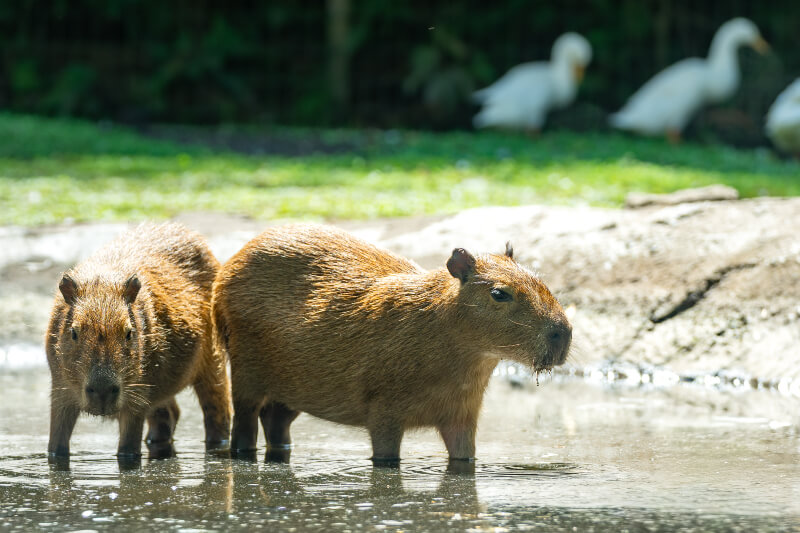
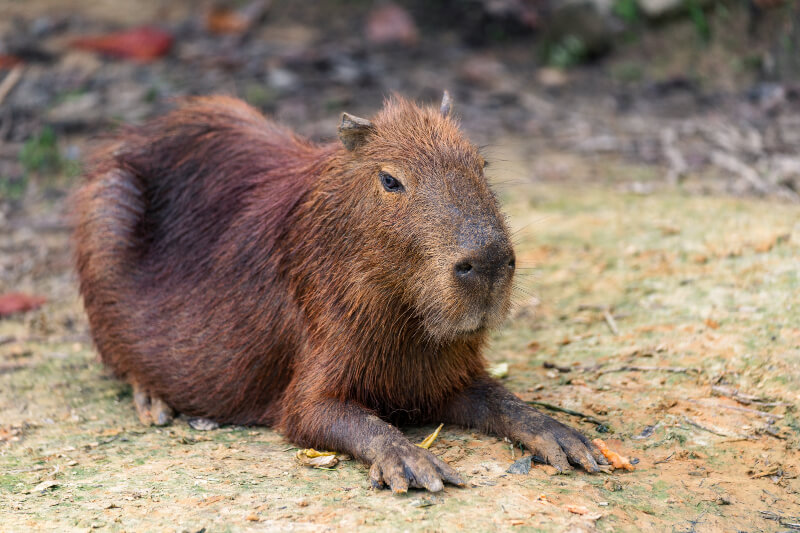
The capybara (Hydrochoerus hydrochaeris) is the largest rodent in the world. Native to South America, it lives mainly in tropical and subtropical regions. It is found in wetlands, along rivers, marshes and lakes, which are essential to its way of life.
The species is classified as Least Concern (LC) by the IUCN. Although widespread, some local populations are weakened by the degradation of aquatic environments.
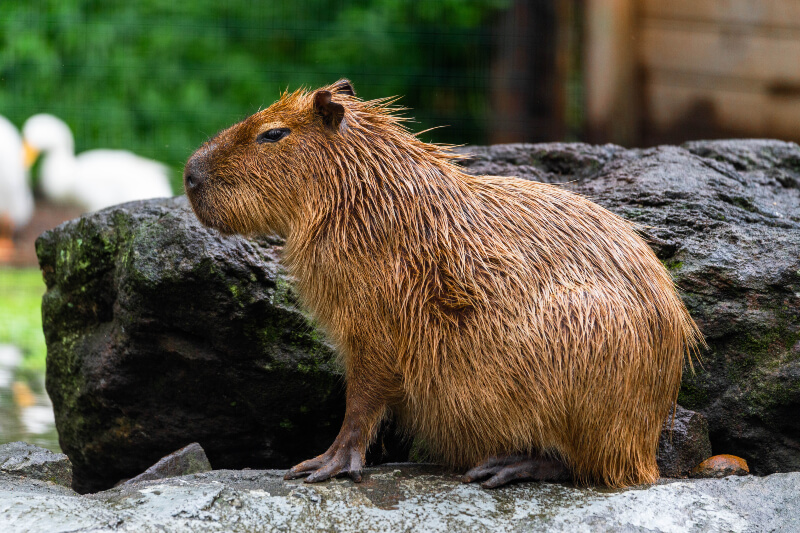
The capybara can exceed one meter in length and weigh up to 60 kg. Its massive body, short legs, and broad snout make it easily recognizable. Very good swimmer, it has partially webbed legs that facilitate its movements in the water, an adaptation common to semi-aquatic species such as the anaconda.
A strict herbivore, it feeds on herbs, aquatic plants and bank plants. It mostly grazes at dawn and at the end of the day. This diet places it at the base of the food chain, like Unau sloth, which is also dependent on tropical vegetation.
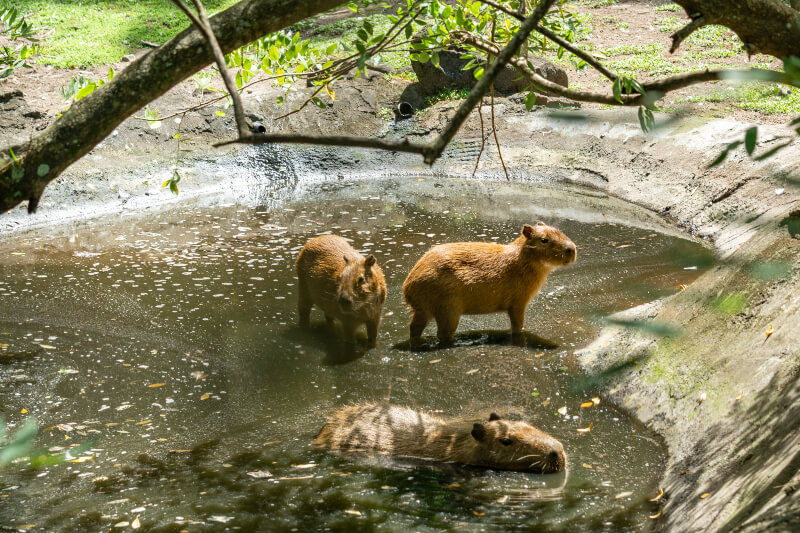
A very sociable animal, the capybara lives in groups that are sometimes numerous. This collective life reinforces vigilance against natural predators, such as the jaguar Or the puma. In case of danger, it takes refuge in water, where it can remain submerged for several minutes.
At the Martinique Zoo, the capybara evolves in an area evoking South American wetlands. Its observation makes it possible to better understand the close links between tropical mammals and aquatic environments.












.svg)


Quelques anecdotes
A very tolerant animal
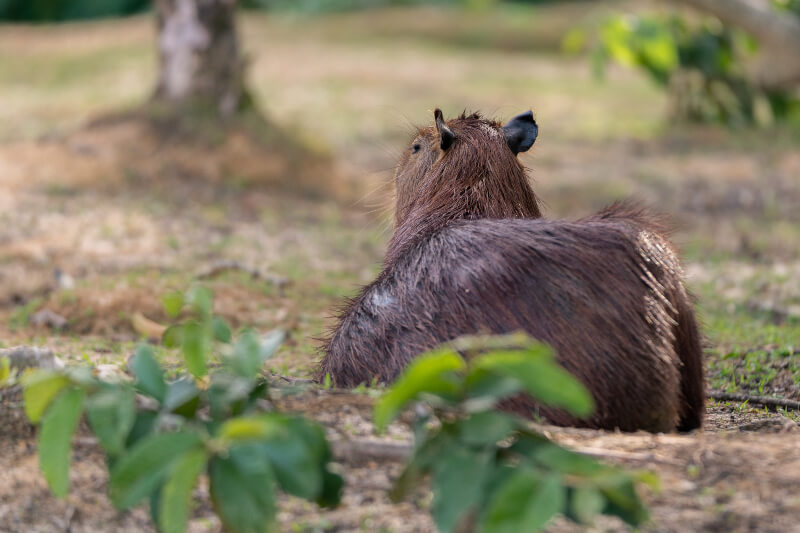
The capybara is known for its calm temperament. In the wild, it often tolerates the presence of other species in its vicinity, sometimes earning it the nickname “the most peaceful rodent in the world.”
A highly anticipated birth
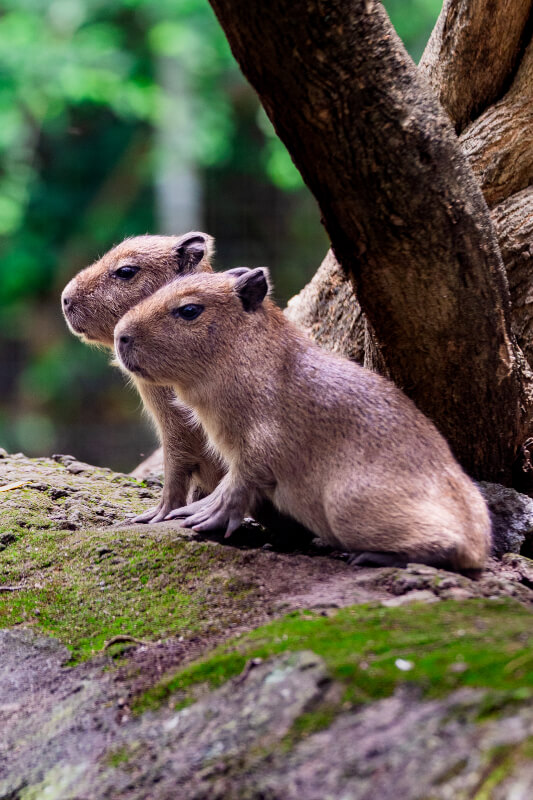
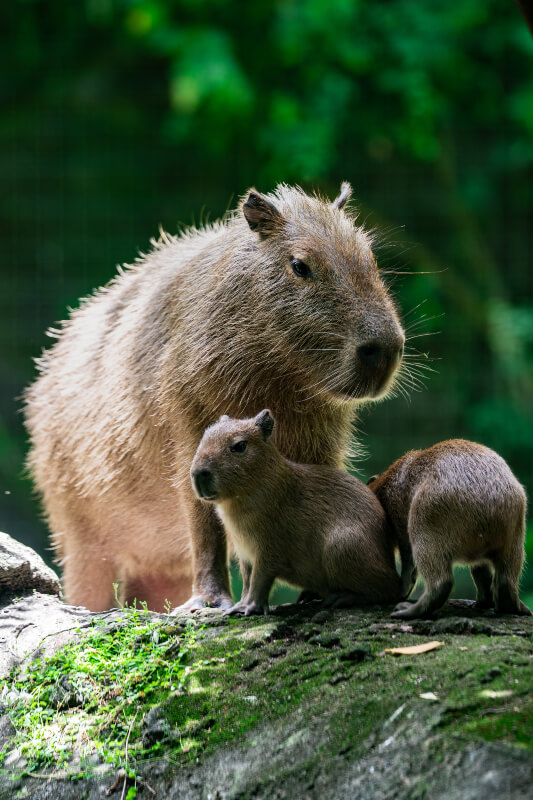
In 2025, the Martinique Zoo welcomed the birth of two young capybaras, twins named Yuca and Kalbass. These births were a highlight for the park teams. The two little ones evolve alongside their parents, Bulle and Belle, under the constant attention of the carers.
.svg)
