


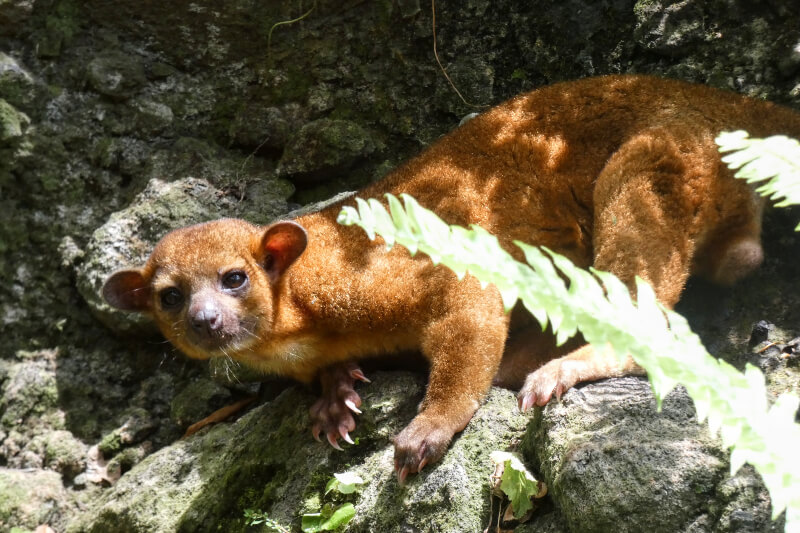
Kinkajou
Potos flavus


The Kinkajou, a discreet night owl in tropical forests
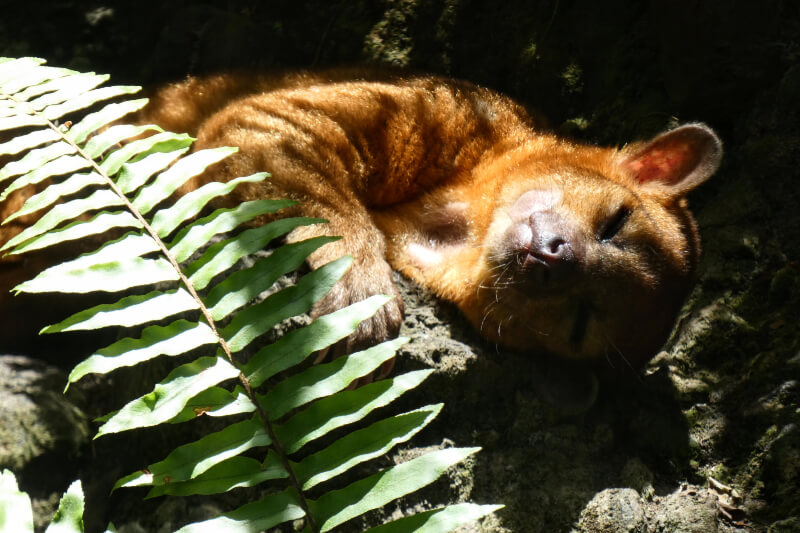
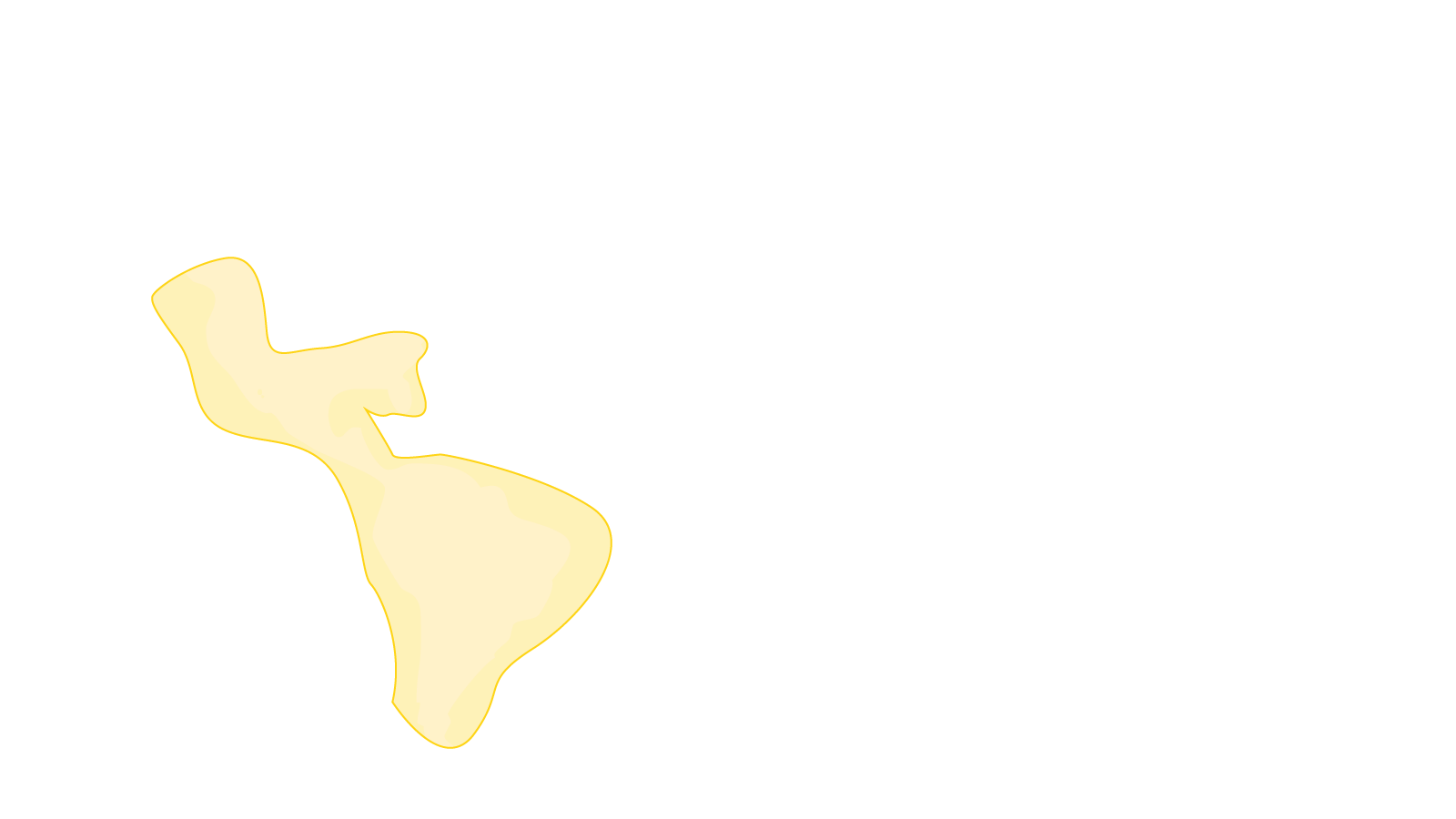
The kinkajou (Potos flavus) is an arboreal mammal native to Central and South America. Little known to the general public, he spends most of his life in the trees, where he moves with astonishing agility. Its light coat, its compact silhouette and its large eyes adapted to night vision give it a singular appearance, sometimes compared to that of a small teddy bear.
The species is classified as Least Concern (LC) by the IUCN. Its situation remains generally stable, but it is closely dependent on the conservation of tropical forests. The disappearance of large trees limits its rest areas and food sources, a challenge shared by other forest species such as brown nasturtium Or the Coati Roux.
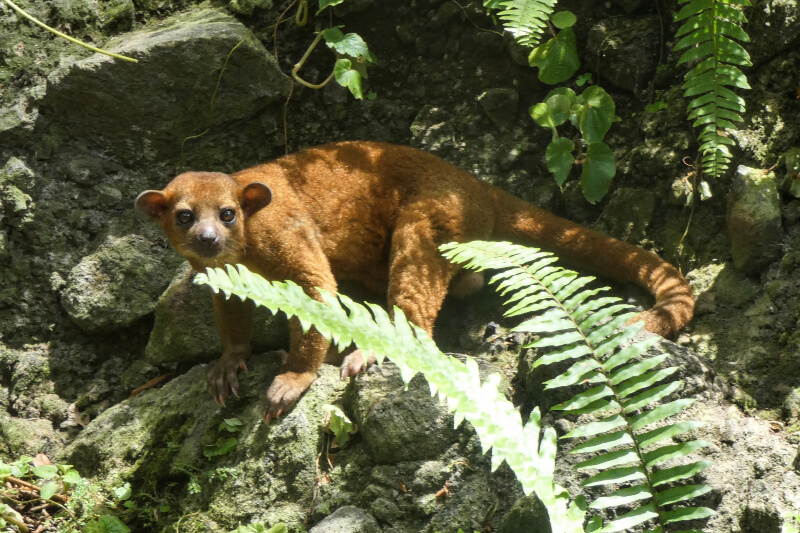
The kinkajou measures between 40 and 60 cm, not including the tail. The latter is entirely prehensile and almost as long as its body. It is used for him to hang on, and to keep his balance as he moves through the canopy. Strictly nocturnal, it becomes active at nightfall and explores the branches with discretion.
Its diet is mainly frugivorous. It consumes ripe fruit, nectar, flowers, and occasionally insects. Its long and thin tongue allows it to reach the nectar at the bottom of the flowers, a behavior that is similar to that of certain birds such as hummingbird. By feeding, it participates in pollination and seed dispersal.
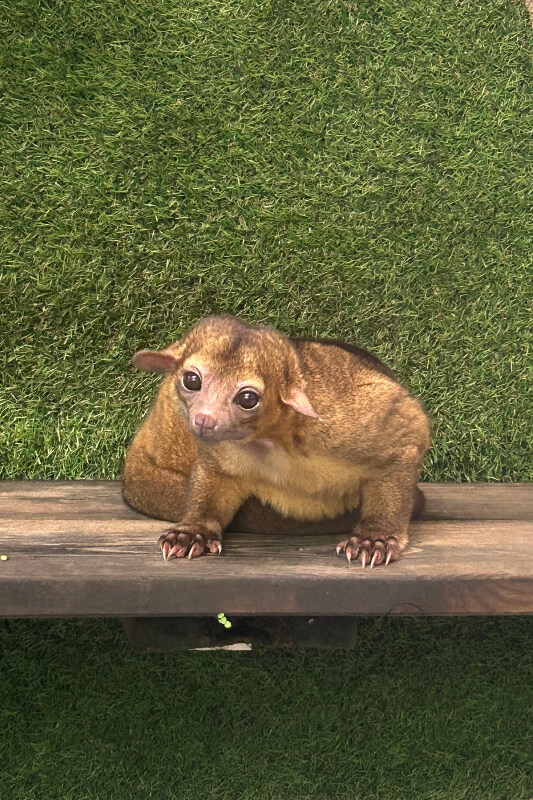
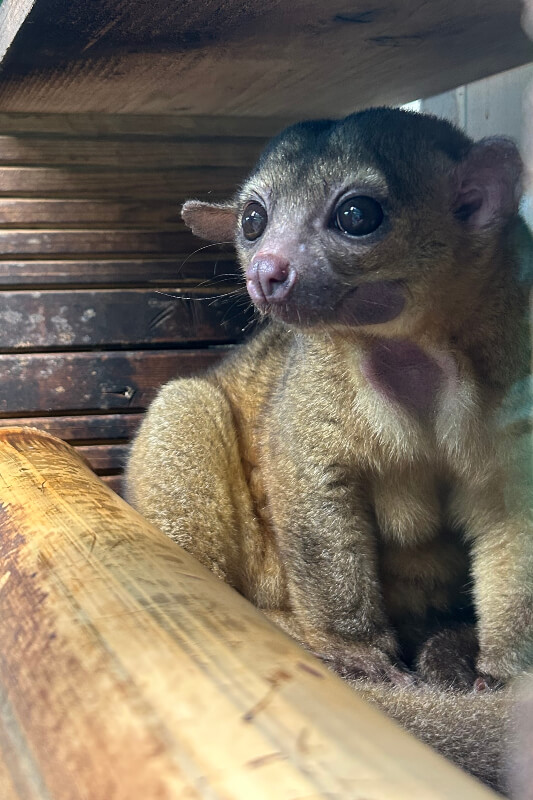
At the Martinique Zoo, the kinkajou allows you to approach the lifestyle of nocturnal and arboreal mammals.





.svg)


Quelques anecdotes
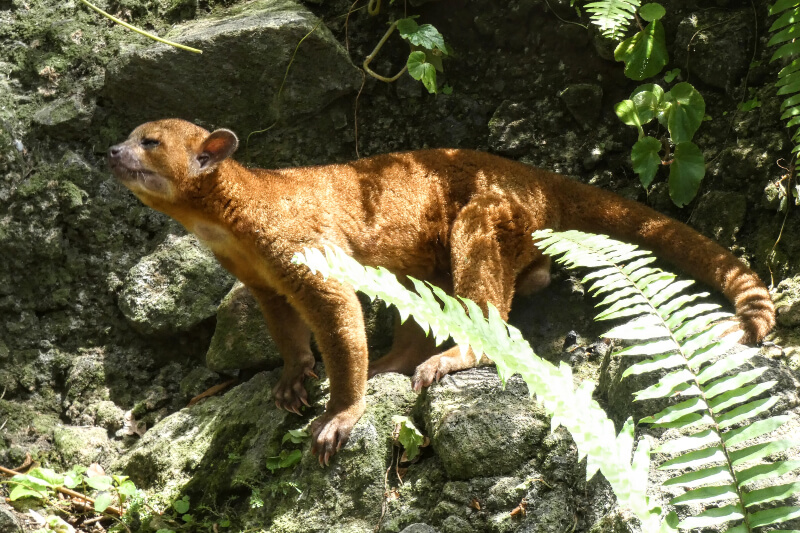
Atilla and Kerka, the kinkajous of l'Habitation Latouche
The Martinique Zoo welcomes two kinkajous: Atilla, the male, and Kerka, the female. Their observation allows us to better understand the adaptation of this mammal to life in trees and to the rhythms of the tropical forest.
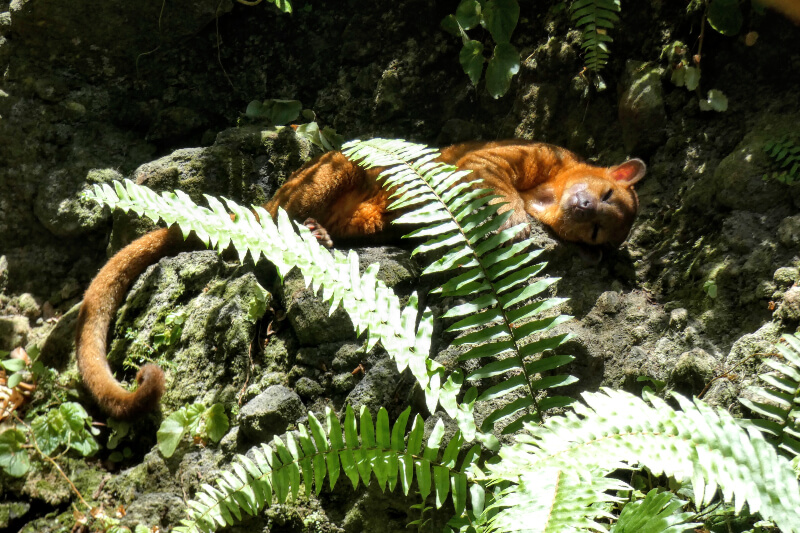
A Body Made to Climb
The kinkajou has remarkable flexibility. Its ankles can rotate widely, allowing it to descend its trunks upside down or to hang under branches. This ability, which is rare in mammals, makes them a particularly effective climber in a dense environment.
.svg)
