


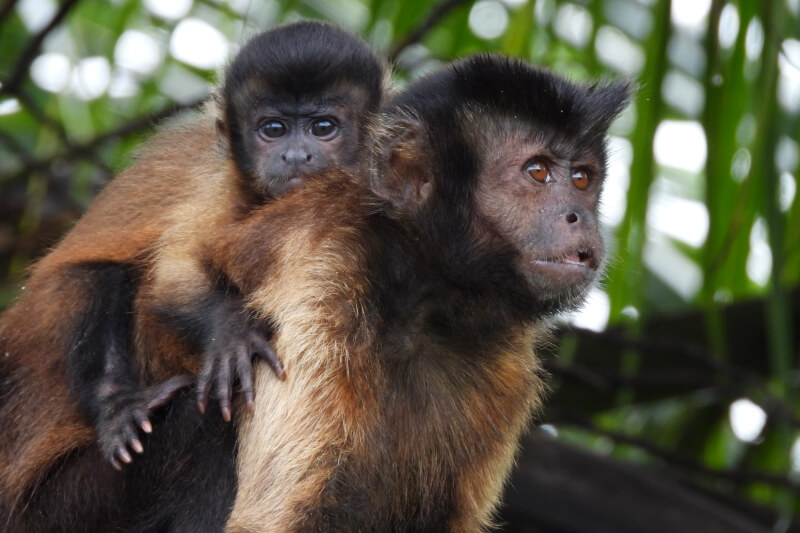
Tufted capuchin
Sapajus apella


The tufted capuchin, agile and observing primate
The Tufted capuchin (Sapajus apella) is a small primate native to South America. Its range extends from Venezuela to northern Argentina. It mainly occupies tropical rainforests, but can also live in more open wooded areas, provided there is sufficient food and shelter.
The species is classified as Least Concern (LC) by the IUCN. It remains relatively widespread, even if some local populations are weakened by deforestation and the illegal trade in wild animals. In its natural environment, the tufted capuchin actively participates in seed dispersal, thus contributing to the renewal of forest vegetation.
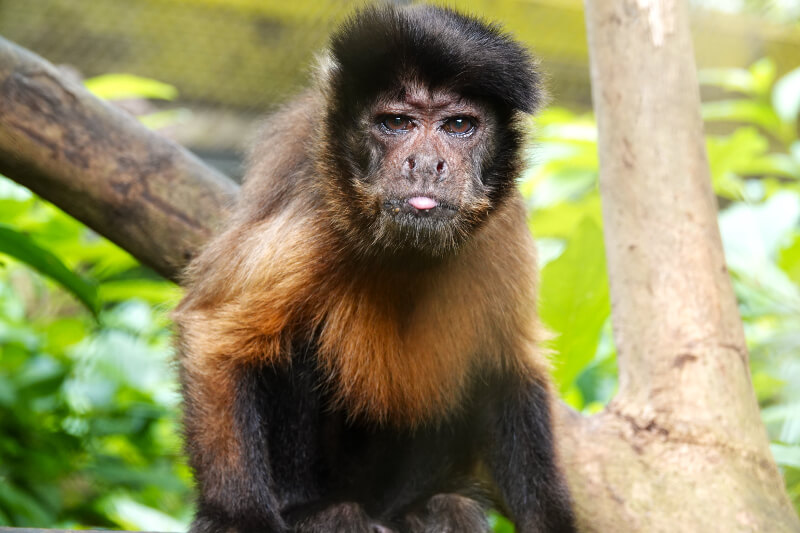
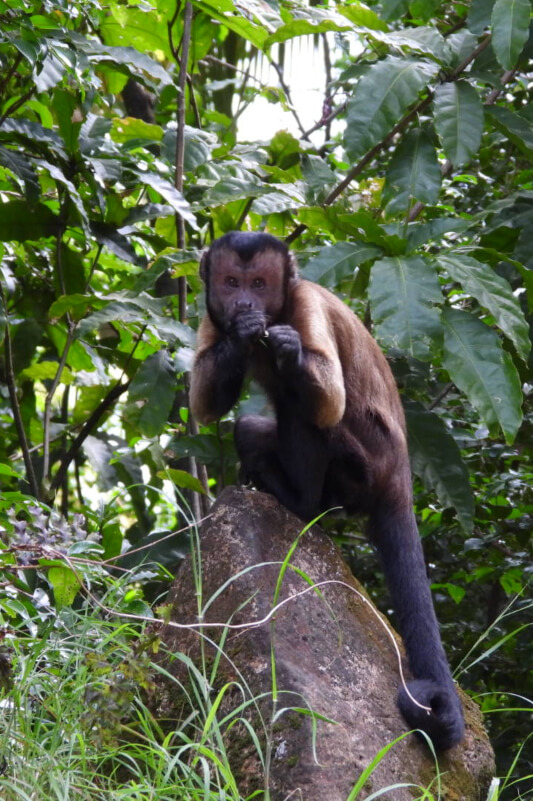
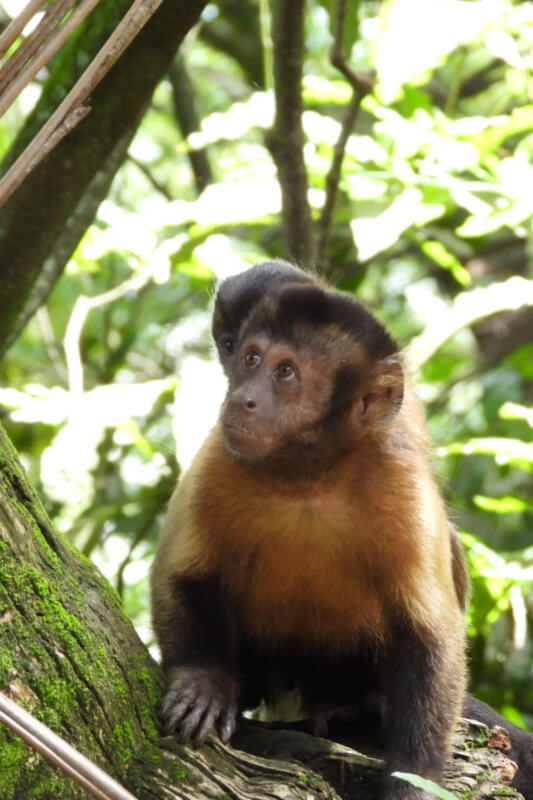
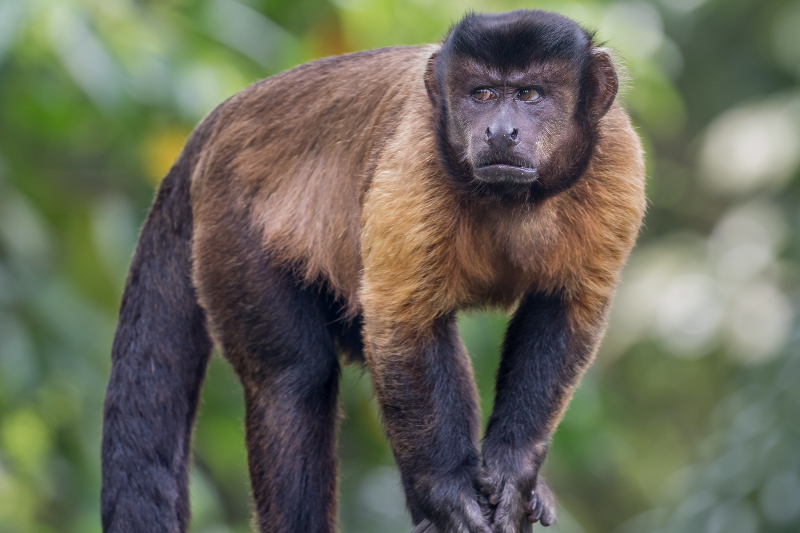
This primate measures on average between 35 and 45 cm, not including its long prehensile tail, almost equivalent to the length of its body. Its coat varies from dark brown to golden brown, and its head is marked by a characteristic hoopoe. Omnivorous, it consumes fruits, seeds, seeds, insects, insects, eggs and sometimes small vertebrates. His very skilful hands allow him to manipulate his environment with precision.
The brown nasturtium is renowned for its high cognitive abilities. He is able to explore, test, and resolve new situations. This intelligence, combined with great agility, makes him one of the most adaptable primates in his group.
At the Martinique Zoo, like the Ateles monkeys, brown nasturtiums evolve in a vegetated environment, integrated into the Habitation Latouche botanical garden. Their observation allows us to better understand the behavior of primates and their essential role in tropical ecosystems.













.svg)


Quelques anecdotes
A recognized tool user
The Tufted capuchin is one of the few primates capable of using tools on a regular basis. In the wild, some people use rocks to crack nuts or access difficult foods. These behaviors are learned by observation and transmitted within the group.

A well-paced social life
Tufted capuchin have a wide repertoire of sounds, mimics and body postures. Alert calls, calming gestures or social games help maintain group cohesion. This constant communication is essential to their social organization and their survival in the face of predators like the jaguar.
.svg)
