


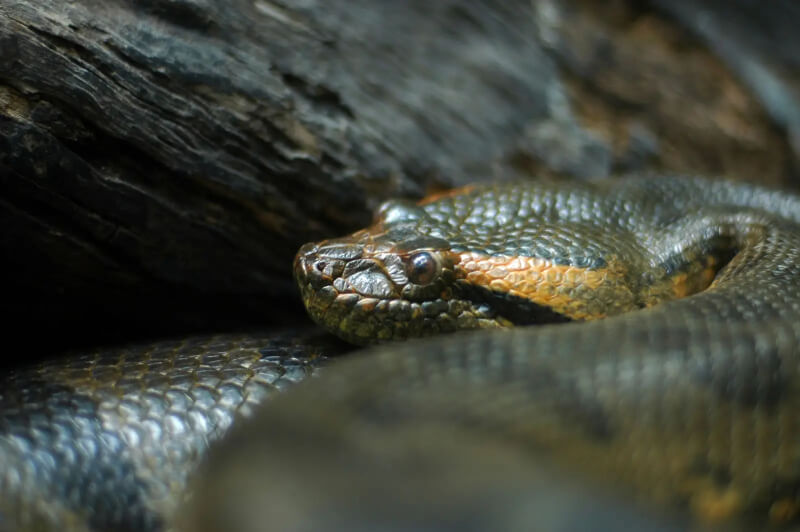
Anaconda
Eunectes murinus


The Anaconda, silent giant of aquatic environments
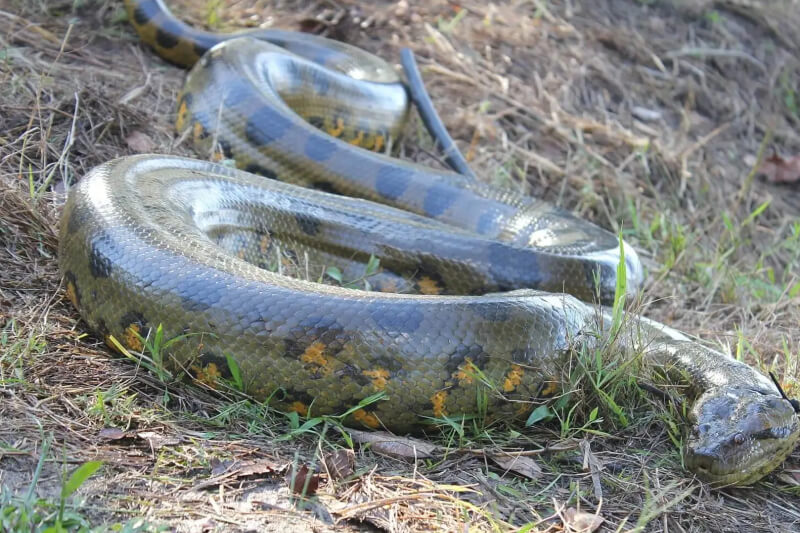
The anaconda (Eunectes murinus) is one of the largest snakes in the world. Native to South America, it lives mainly in the tropical regions of the Amazon basin. It is found in wetlands, swamps, slow rivers, and flooded forests. This semi-aquatic snake is perfectly adapted to life in water as well as on land.
The species is classified as Least Concern (LC) by the IUCN. Although it is still widespread, some local populations are weakened by the degradation of wetlands and human pressure. Like other large reptiles, the anaconda plays an important role in the balance of tropical aquatic ecosystems.
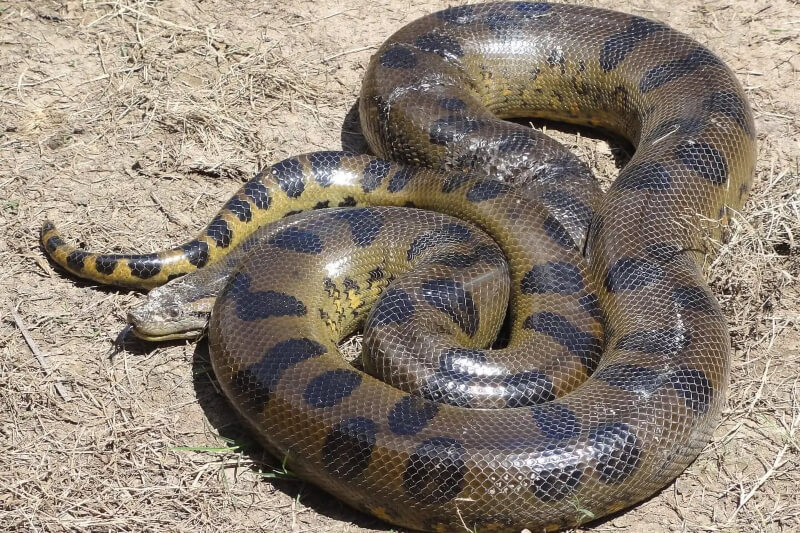
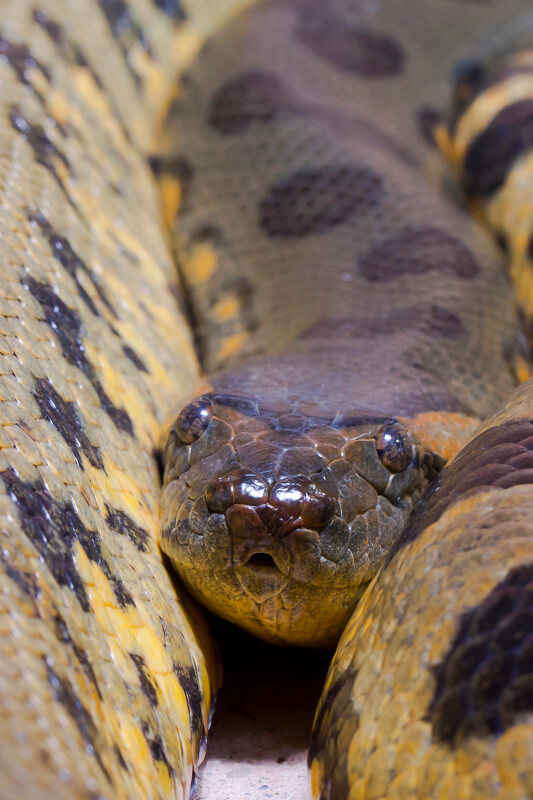
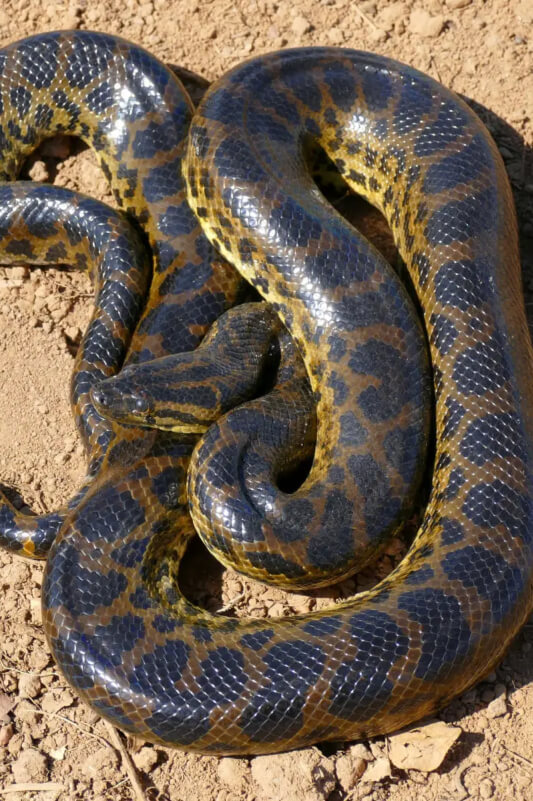
The anaconda can exceed 5 meters in length and reach a very high weight, making it the heaviest snake in the world. Its massive body, olive green with black spots, offers it excellent camouflage in murky waters and dense vegetation. Unlike venomous snakes, it captures its prey by constriction, like the Boa constrictor.
Its diet is strictly carnivorous. It feeds on fish, birds, reptiles, and mammals. Thanks to its power, it can catch large prey. This position as a superpredator places it at the top of the food chain, alongside large carnivores like the jaguar Or the puma, each playing a different role depending on their environment.
Anacondas are mostly active at dawn and dusk. An excellent swimmer, he spends much of his time submerged, with only his eyes and nostrils sticking out of the surface. This strategy allows him to hunt discreetly and avoid hot weather.
At the Martinique Zoo, its observation makes it possible to approach the diversity of South American reptiles and to better understand their ecological role, in addition to arboreal species such as brown nasturtiums Or the Arteles, and more discreet reptiles visible along the route.

.svg)


Quelques anecdotes
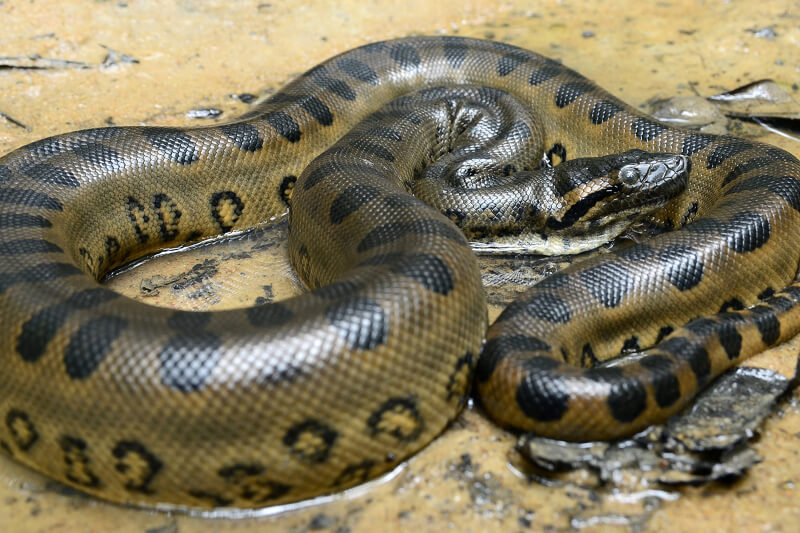
An ovoviviparous snake
Unlike many snakes, anacondas do not lay eggs. The female gives birth to babies that have already been formed. A litter can include several dozen young people, fully autonomous from birth.
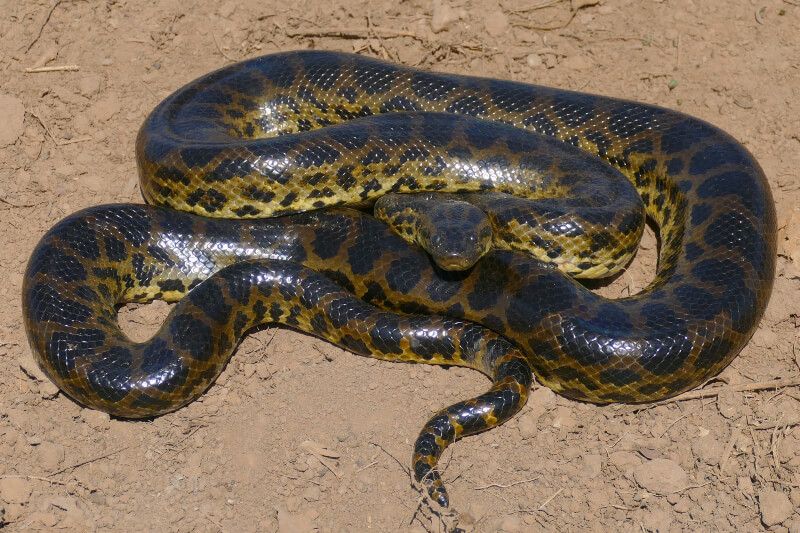
Exceptional strength
The anaconda has extremely powerful muscles. Its ability to immobilize large prey is based on gradual constriction, which prevents breathing rather than crushing the victim.
.svg)
